15 Brilliant Cat Tree Bedroom Ideas That Are Going Viral
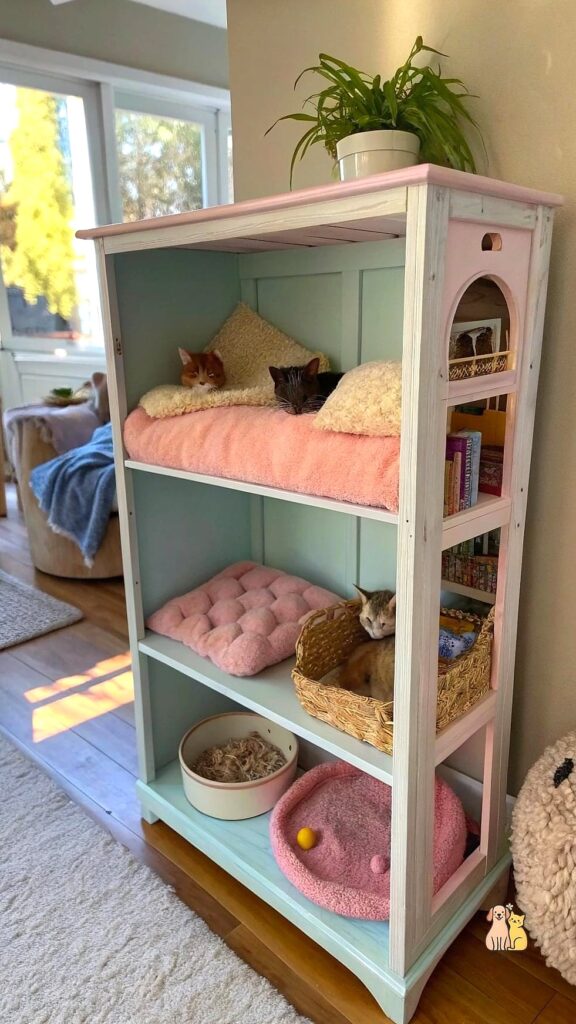
- The Corner Tower That Disappears Into the Room
- The Window Perch Combo Tree
- The Floor-to-Ceiling Pressure-Mounted Tower
- The Wall-Mounted Shelf Climbing System
- The Canopy Bed Cat Tree
- The Minimalist Scandinavian Tree
- The Under-Bed Nook With Attached Climbing Post
- The Hammock-Style Suspended Tree
- The Bookshelf-Integrated Cat Tree
- The Tall Sisal Rope Tower With Multiple Hideaways
- The Boho-Style Macrame Cat Perch
- The Modular Stackable Cube System
- The Repurposed Ladder Cat Climb
- The Faux Fur Cloud Tree
- The Two-Story Loft Tree With Built-In Feeding Station
15 Brilliant Cat Tree Bedroom Ideas That Are Going Viral
If your cat has ever stared you down from the top of your dresser like they own the place, congratulations — they basically do. Cats crave height, and giving them a proper spot to climb in your bedroom keeps them off your nightstand and out of your closet chaos. These 15 cat tree bedroom ideas have been popping up all over social media lately, and honestly, most of them are way more doable than they look.
The Corner Tower That Disappears Into the Room
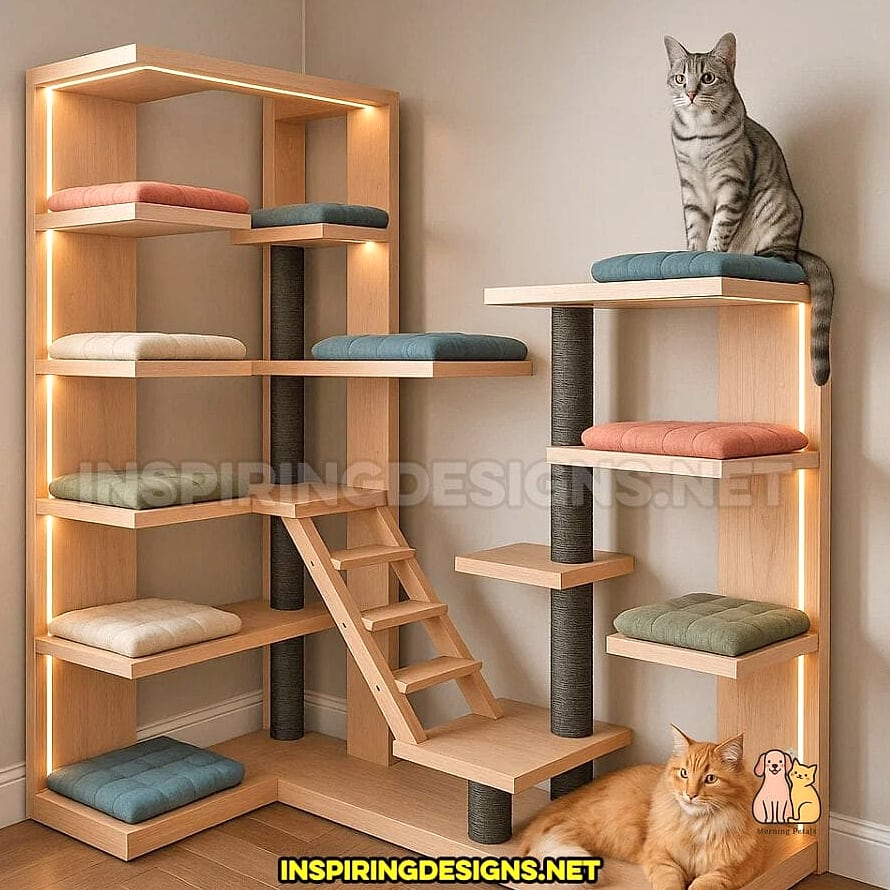
This tall, slim cat tree tucks neatly into an unused bedroom corner without eating up floor space. It’s ideal for smaller bedrooms or apartment living where every square foot matters.
Cats love the vertical climbing options, and multiple perches mean your cat can pick their favorite level depending on their mood. Look for neutral fabric colors like beige or gray so it blends with your existing decor instead of screaming “cat furniture.”
Budget versions run under fifty dollars, while taller, sturdier towers with thicker posts cost more but hold up better for bigger cats. This one’s great for beginner owners who just want something simple that works.
The Window Perch Combo Tree
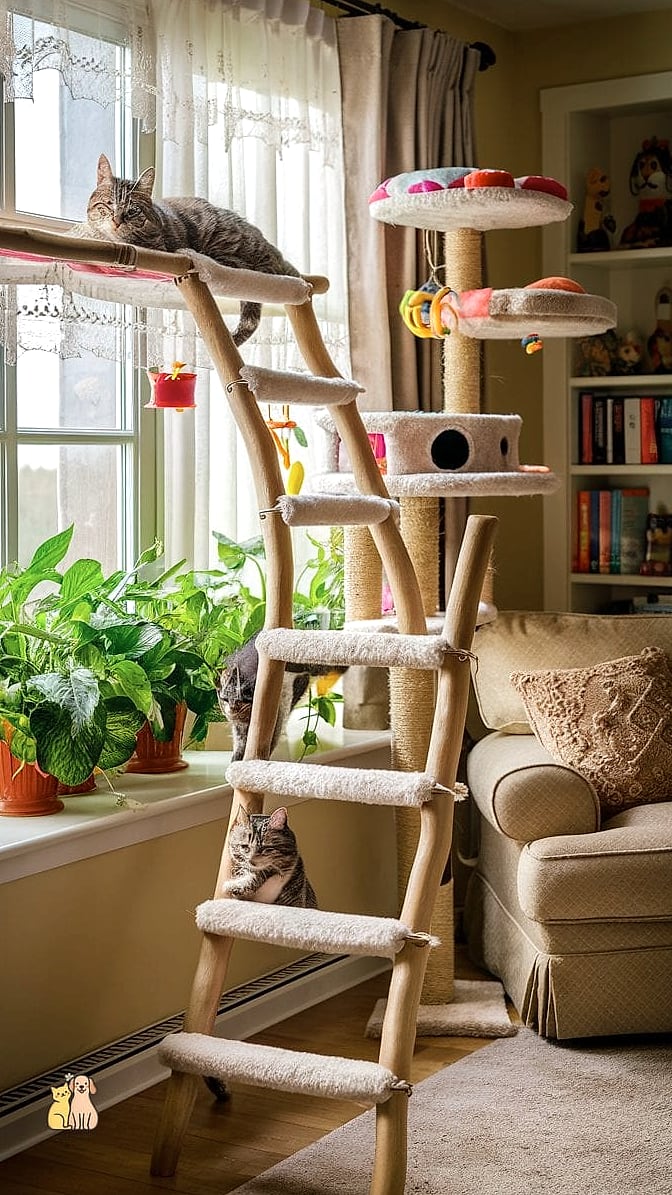
Cats are obsessed with watching the world outside, so pairing a cat tree with a window-adjacent perch is basically an instant hit. Position it near natural light and your cat will probably claim it as their permanent daytime spot.
This setup works especially well for indoor-only cats who need extra mental stimulation. Bird watching from a cozy perch counts as enrichment, and it’s free entertainment that beats any puzzle feeder.
Choose a tree with a wide, cushioned platform at window height. Older cats or those with joint issues do best with lower step spacing so jumping isn’t a strain.
The Floor-to-Ceiling Pressure-Mounted Tower
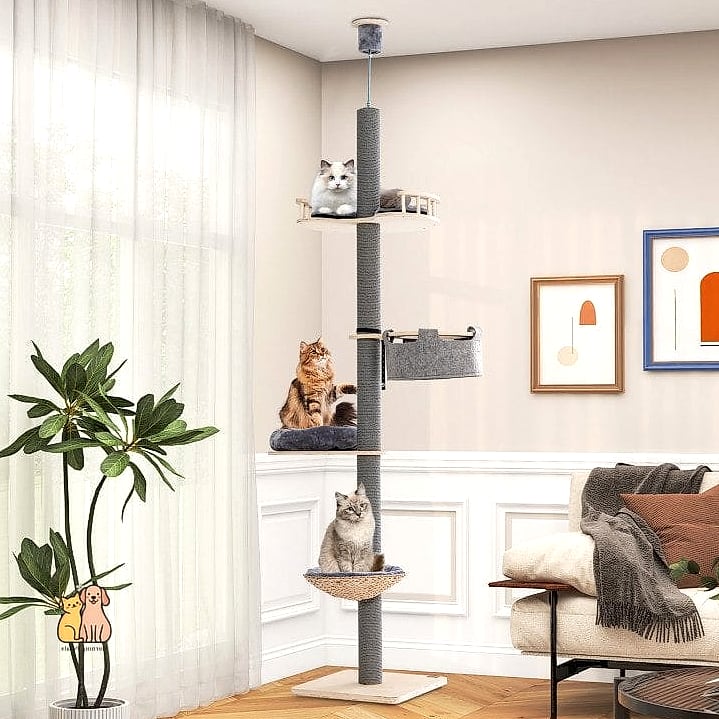
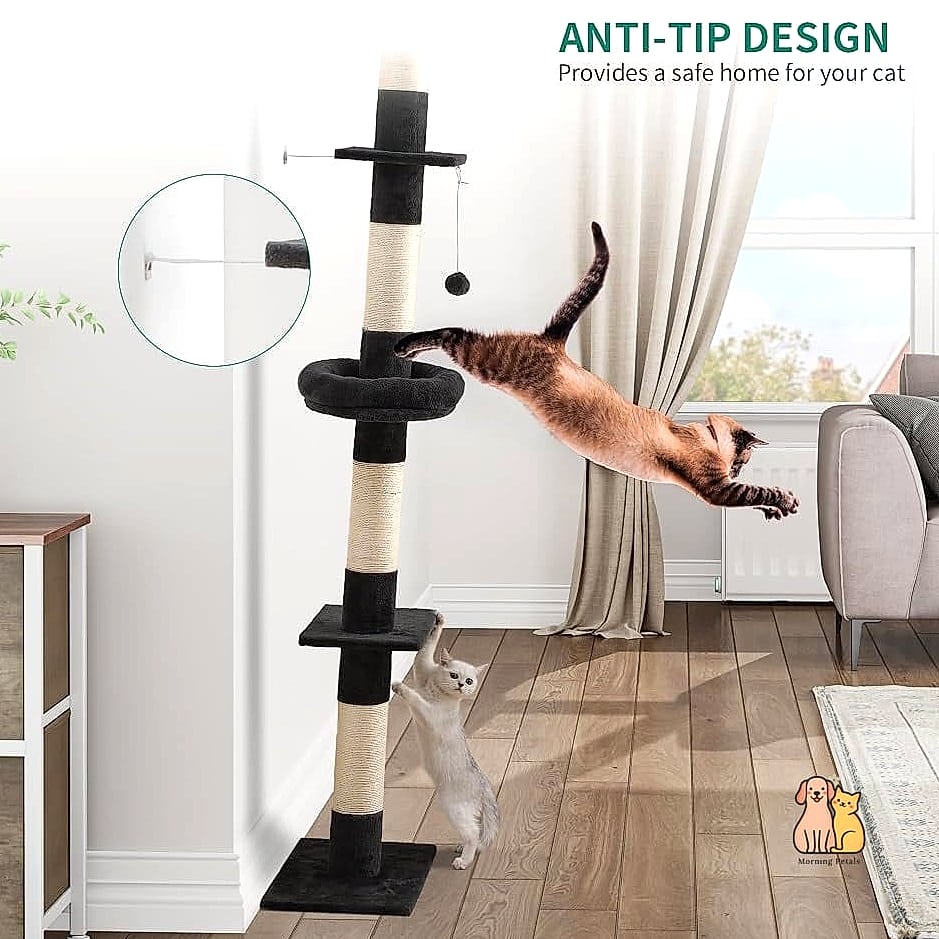
This is the setup going viral because it looks like something out of a design magazine rather than a pet store catalog. Pressure-mounted trees use tension poles instead of a heavy base, so they stretch from floor to ceiling without drilling into anything.
They’re perfect for renters who want a dramatic vertical statement piece without losing their security deposit. Multiple cats can use different levels at once, which cuts down on territorial squabbles.
Setup takes some patience since you need accurate ceiling measurements, so this leans more toward intermediate difficulty. The payoff is a genuinely impressive centerpiece that doubles as a scratch post and hangout spot.
The Wall-Mounted Shelf Climbing System
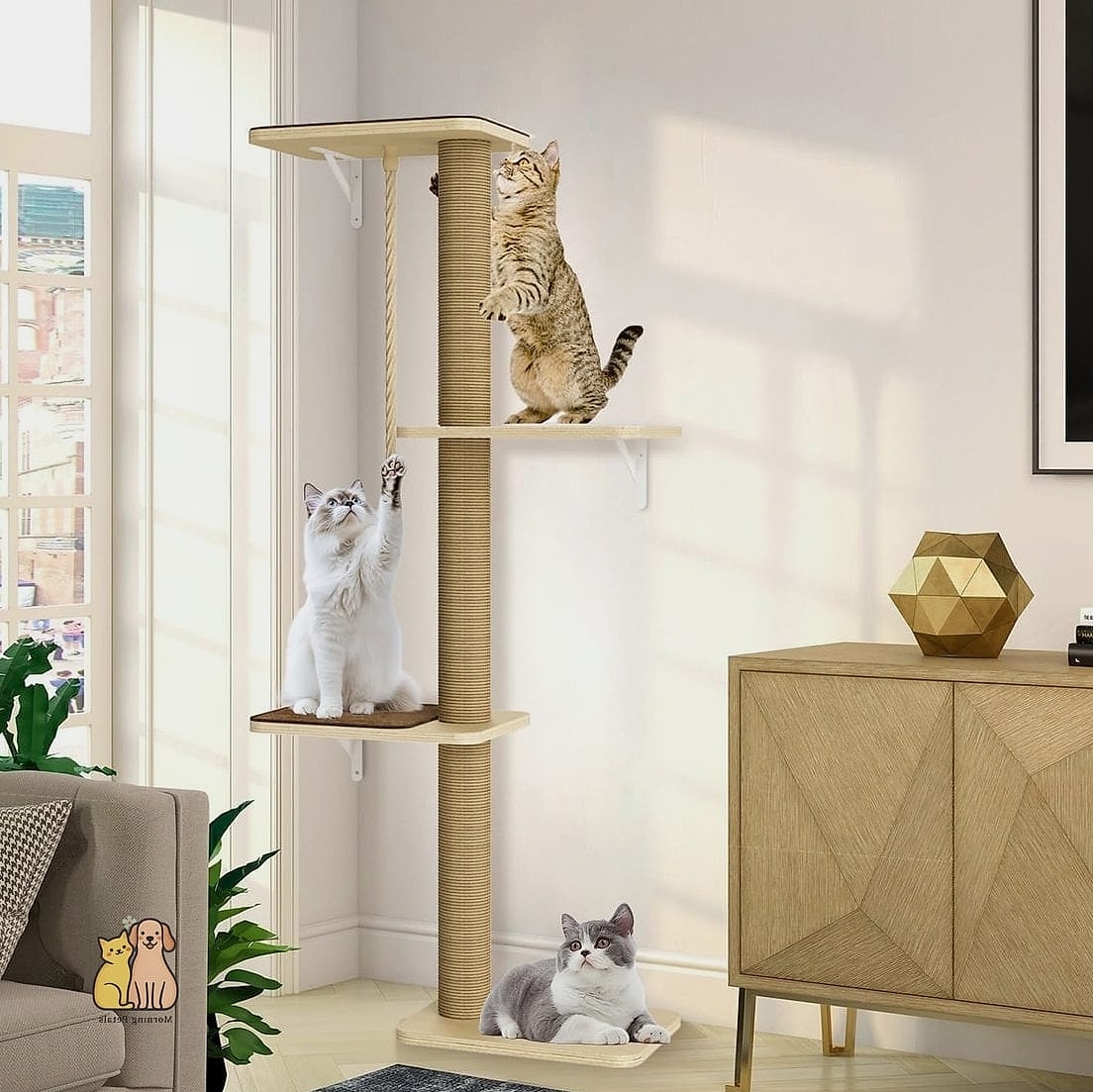
Skip the bulky base entirely and go with a series of wall-mounted cat shelves that lead up toward the ceiling. This staggered shelf trend has taken over cat-owner social media because it turns a plain wall into a functional climbing wall.
It suits confident, agile cats who enjoy jumping between platforms rather than lounging on one big perch. Kittens might need a lower starting shelf until they build coordination.
DIY versions use floating shelves from a hardware store wrapped in sisal rope or soft carpet remnants. It’s a weekend project, but the finished look genuinely rivals expensive store-bought versions.
The Canopy Bed Cat Tree
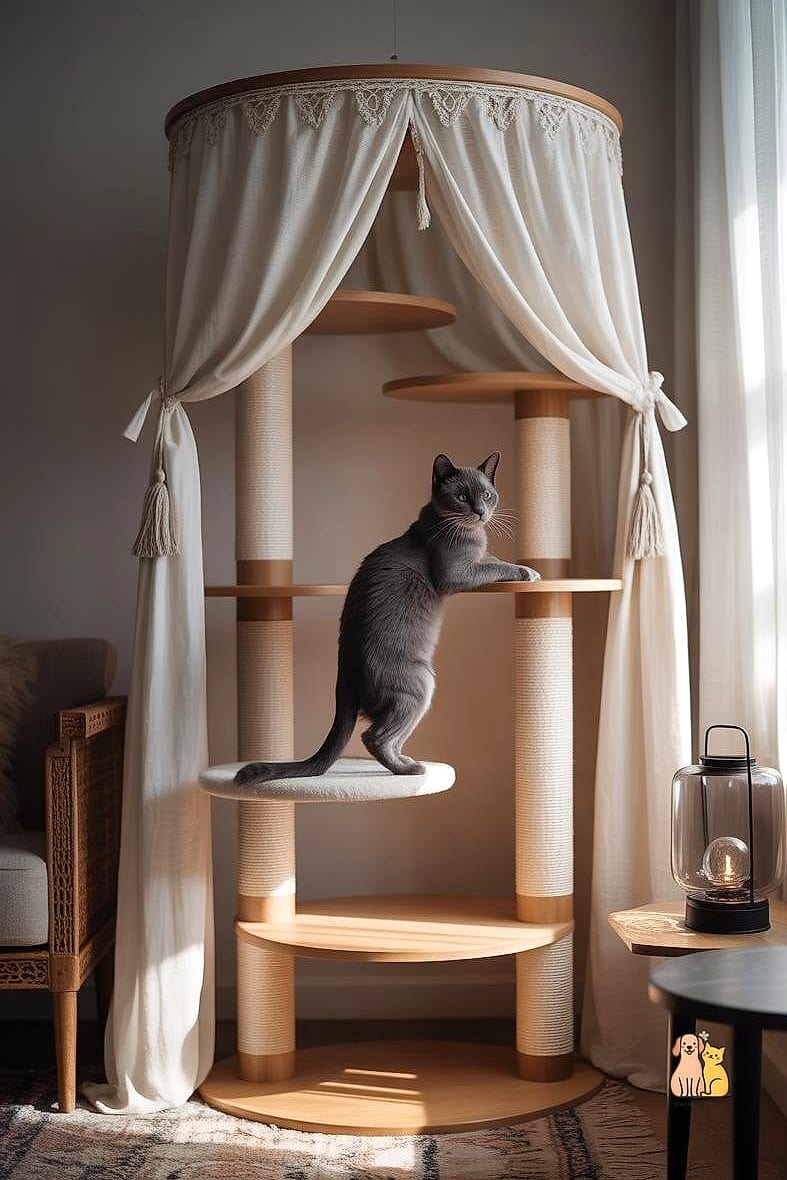
This one’s for owners who want their cat’s furniture to actually match the room’s aesheticstic instead of standing out like an eyesore. A canopy-style cat tree includes a covered hideaway platform that mimics a little four-poster bed.
Shy or anxious cats particularly benefit from the enclosed space since it gives them somewhere to retreat and feel secure. It’s a nice option for multi-cat households where one cat needs a private hideout away from the others.
These trees tend to be pricier because of the added fabric structure, but the visual payoff is worth it if you’re going for a coordinated bedroom look.
The Minimalist Scandinavian Tree
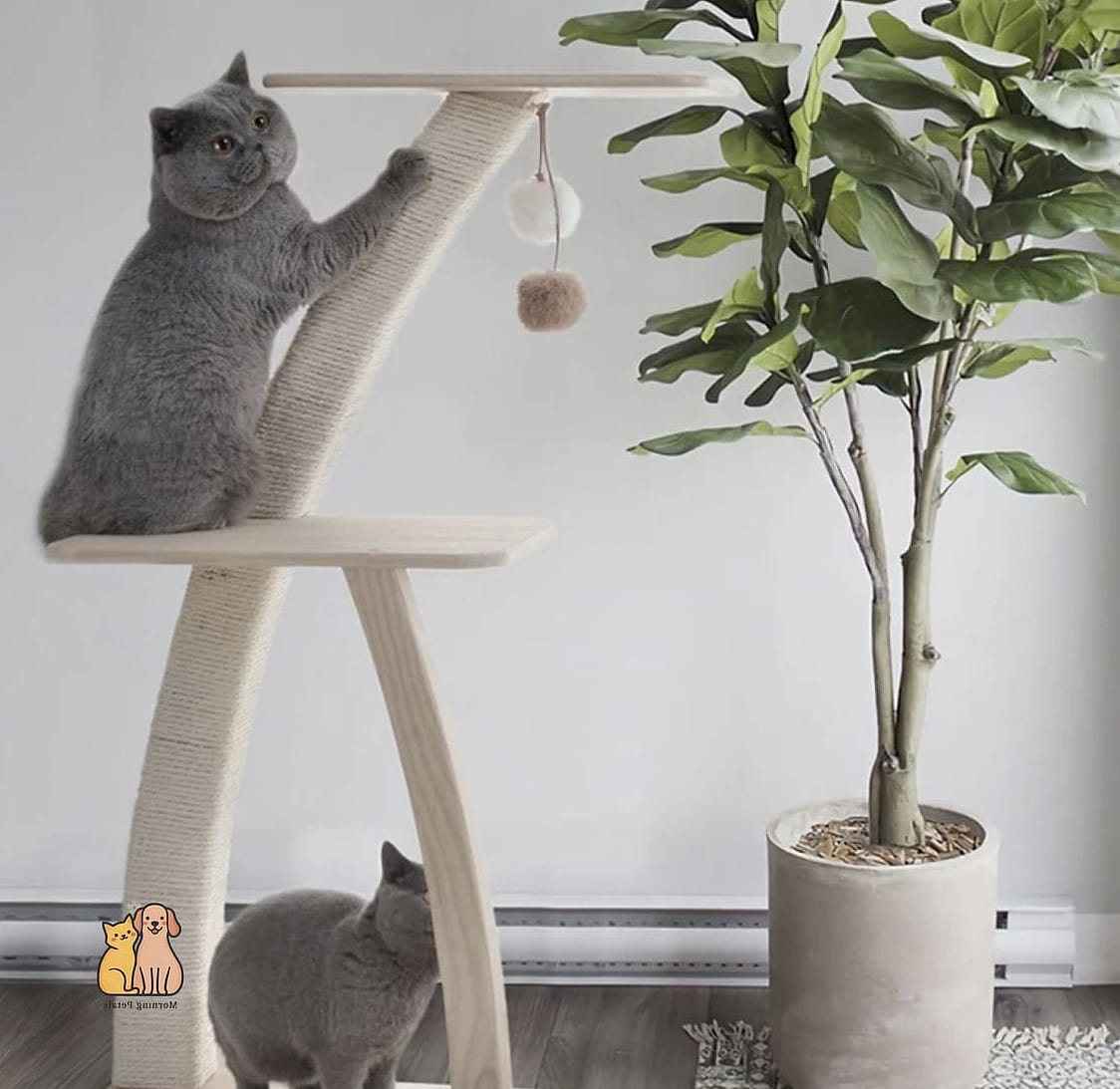
Light wood tones, clean lines, and simple rope wrapping define this style, and it’s everywhere on home design accounts right now. It fits bedrooms with a neutral, airy color palette without disrupting the vibe.
This design tends to be smaller and lower profile, so it works better for cats who prefer lounging over aggressive climbing. It’s also a solid pick for owners who share space with a partner who isn’t thrilled about giant carpeted towers.
Higher-end versions use solid birch or oak, while budget options substitute engineered wood with a similar finish. Either way, it looks intentional rather than like an afterthought.
The Under-Bed Nook With Attached Climbing Post
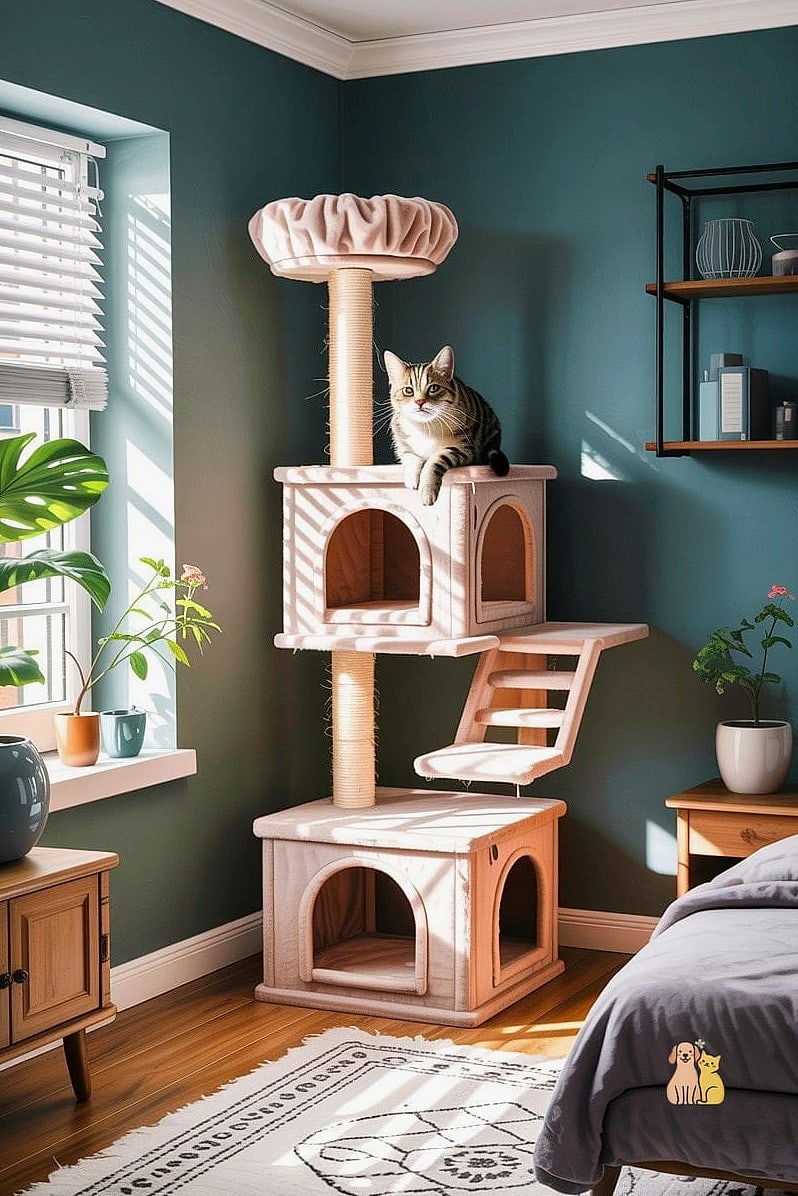
If your bed has clearance underneath, this idea turns that dead space into a cozy den connected to a small climbing post. Cats already love hiding under beds, so giving them an actual designated nook there feels like meeting them halfway.
This works particularly well for senior cats or those recovering from injury who want a low-impact climbing option nearby. It also keeps clutter-prone humans from just shoving random boxes under there instead.
A basic pet bed tucked under the frame paired with a short scratch post beside it recreates this look without any real construction involved.
The Hammock-Style Suspended Tree
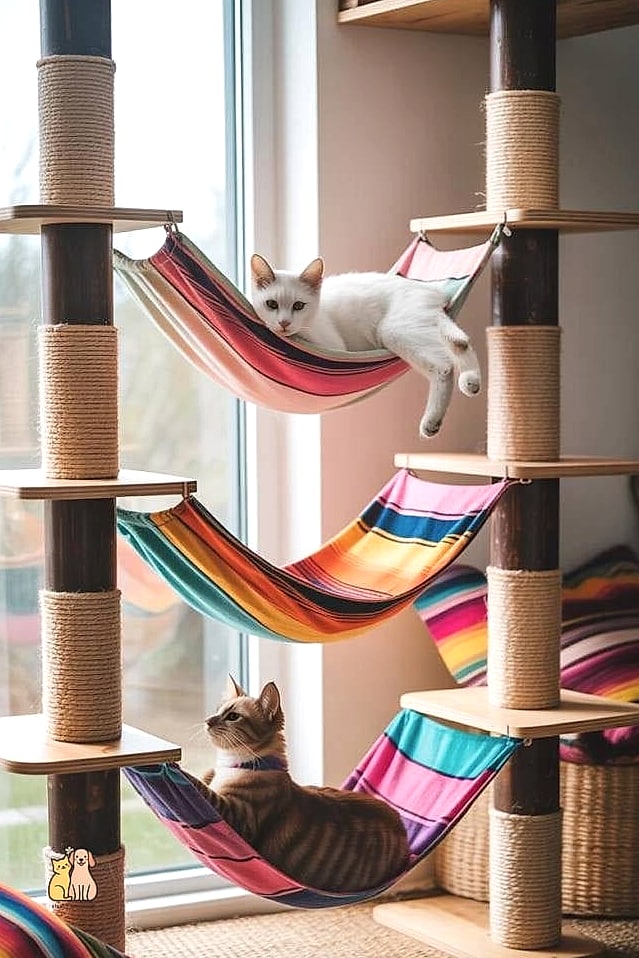
Suspended hammock platforms have become a favorite because cats genuinely seem to love the swaying, cocoon-like feel. These trees typically combine one or two hammock levels with a traditional perch up top.
Playful, food-motivated cats enjoy batting at hanging toys often attached nearby, turning nap time into intermittent playtime. It’s a fun pick for younger cats with more energy to burn.
Make sure the hammock fabric is washable, because let’s be honest, cat fur and the occasional hairball happen. A removable, machine-washable cover saves you a headache down the line.
The Bookshelf-Integrated Cat Tree
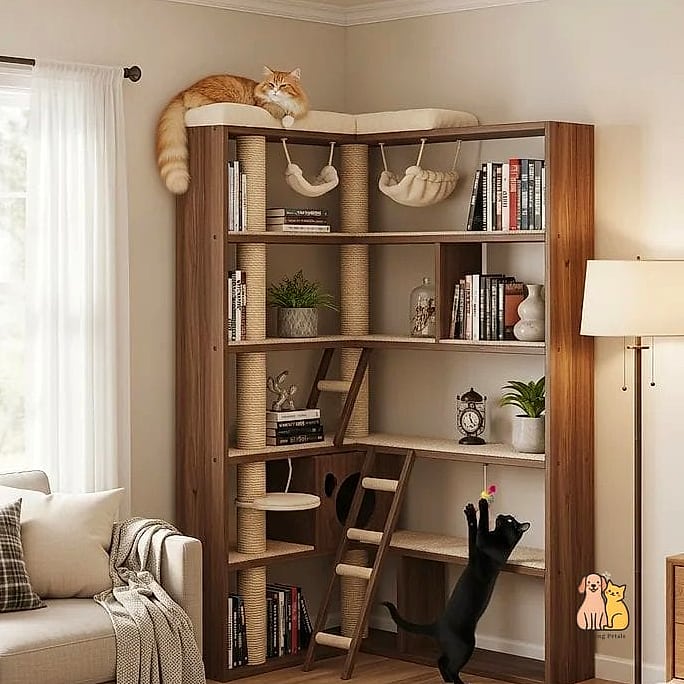
This idea blends a real bookshelf with built-in cat perches so the furniture serves double duty. It’s become popular among apartment dwellers who don’t have room for a separate freestanding cat tree.
Cats get to climb among your books and belongings, which honestly makes the space feel more like their room too. It suits curious, exploratory cats who like investigating higher shelves anyway.
You can buy pre-made versions or modify an existing bookshelf by adding a carpeted step or two. Either route, just double check the shelf is anchored to the wall securely before your cat starts using it as a highway.
The Tall Sisal Rope Tower With Multiple Hideaways
This classic multi-level design has stuck around because it just works — several enclosed cubbies stacked with sisal-wrapped posts in between. It’s a reliable pick for multi-cat households since there’s enough vertical real estate for everyone to have their own spot.
Scratching behavior gets a healthy outlet here too, which can save your bedspread and curtains from becoming impromptu scratch posts. Sisal rope holds up well over time compared to cheaper carpet materials.
These towers run larger, so measure your available floor space carefully before ordering. It’s not the most compact option, but it’s hard to beat for durability and value.
The Boho-Style Macrame Cat Perch
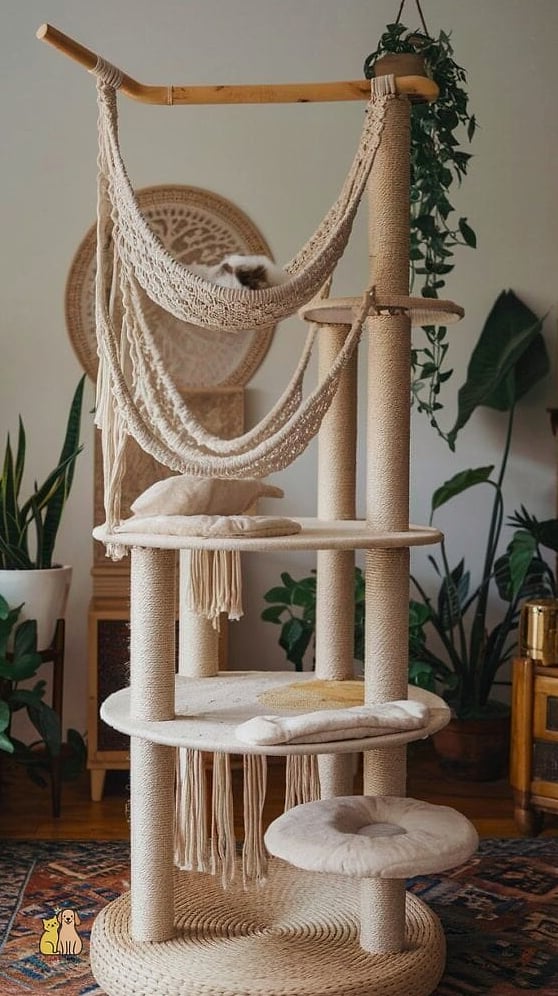
Macrame hangings and woven textures have made their way from wall art into cat furniture, and the look is surprisingly charming. A single suspended macrame perch adds visual interest without taking up much room.
This style suits smaller cats or kittens better than larger breeds, since macrame platforms typically have lower weight limits than solid wood shelving. Always check the manufacturer’s weight rating before trusting it with a chunkier cat.
It pairs beautifully with plant-filled, earthy bedroom decor, and honestly it might be the most Pinterest-worthy option on this list.
The Modular Stackable Cube System
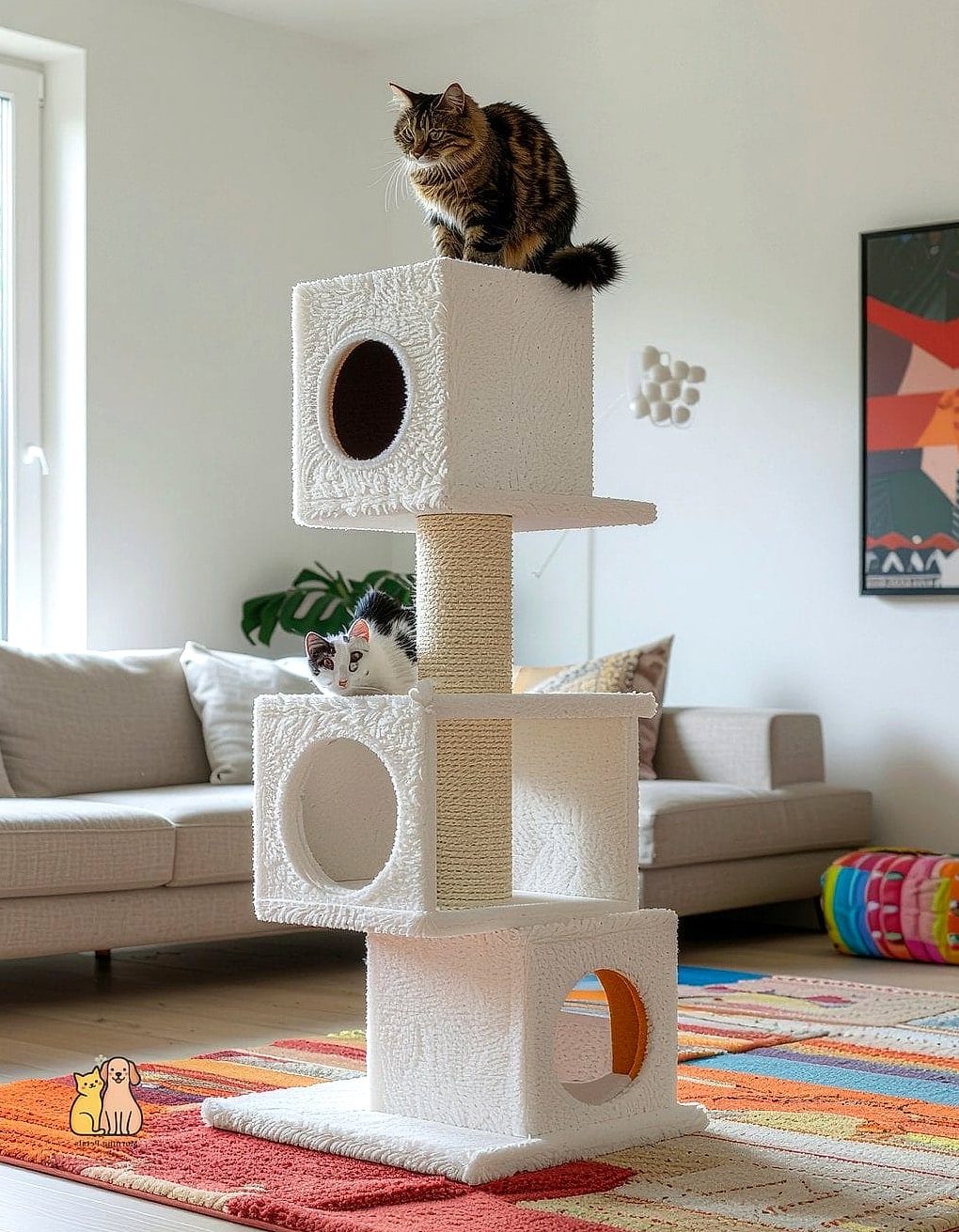
Instead of one fixed tree, this setup uses individual connector cubes and platforms you can rearrange whenever you want a new layout. It’s great for owners who like redecorating or renting a space where furniture needs change often.
Cats that enjoy hide-and-seek games benefit from the enclosed cube sections, which double as a nap spot and a hiding place from vacuum cleaners and other bedroom intruders (looking at you, robot vacuum).
Starter sets are pretty affordable, and you can expand the system piece by piece as your budget allows. It’s flexible in a way that traditional cat trees just aren’t.
The Repurposed Ladder Cat Climb
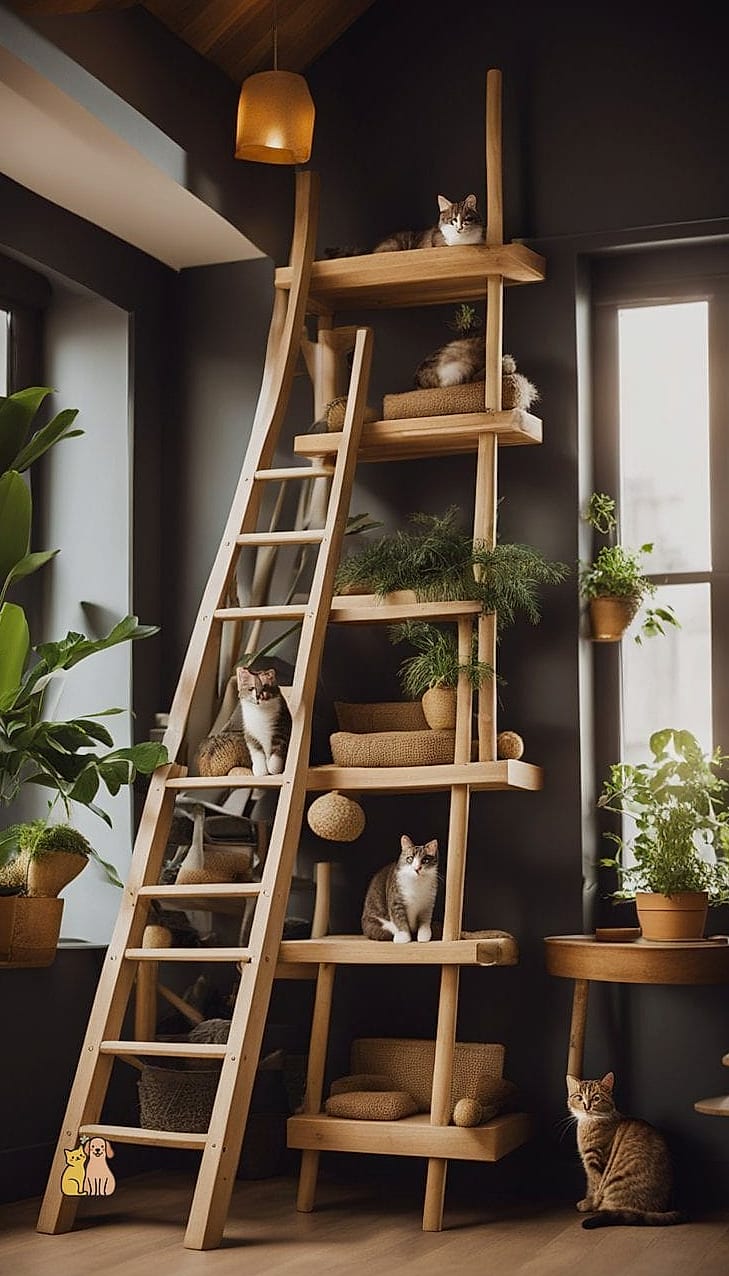
An old wooden ladder leaned against the wall, fitted with small platforms at each rung, has become a favorite DIY project among crafty cat owners. It has a rustic, farmhouse feel that fits a lot of current bedroom trends.
This works well for lightweight or younger cats, though it’s worth double checking stability since ladders weren’t originally built with feline acrobatics in mind. Securing it to the wall is a smart extra step for safety.
It’s one of the more budget-friendly ideas here if you already have an old ladder lying around, and it gives your room genuine character.
The Faux Fur Cloud Tree
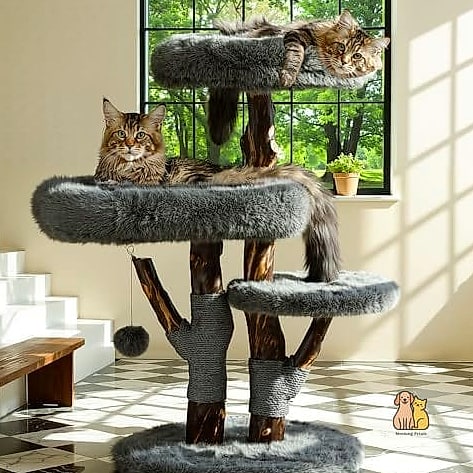
This trendy design uses soft, fluffy faux fur fabric to create a cloud-like tree that looks as comfortable as it sounds. It’s become a favorite for cozy, textured bedroom aesthetics where everything feels a little plush and inviting.
Cats that love burrowing and kneading soft surfaces tend to gravitate toward these immediately. It’s also just genuinely nice to pet, which is a bonus for you too.
Keep a lint roller handy, because faux fur combined with cat fur can get a little wild during shedding season. Regular vacuuming keeps it looking fresh.
The Two-Story Loft Tree With Built-In Feeding Station
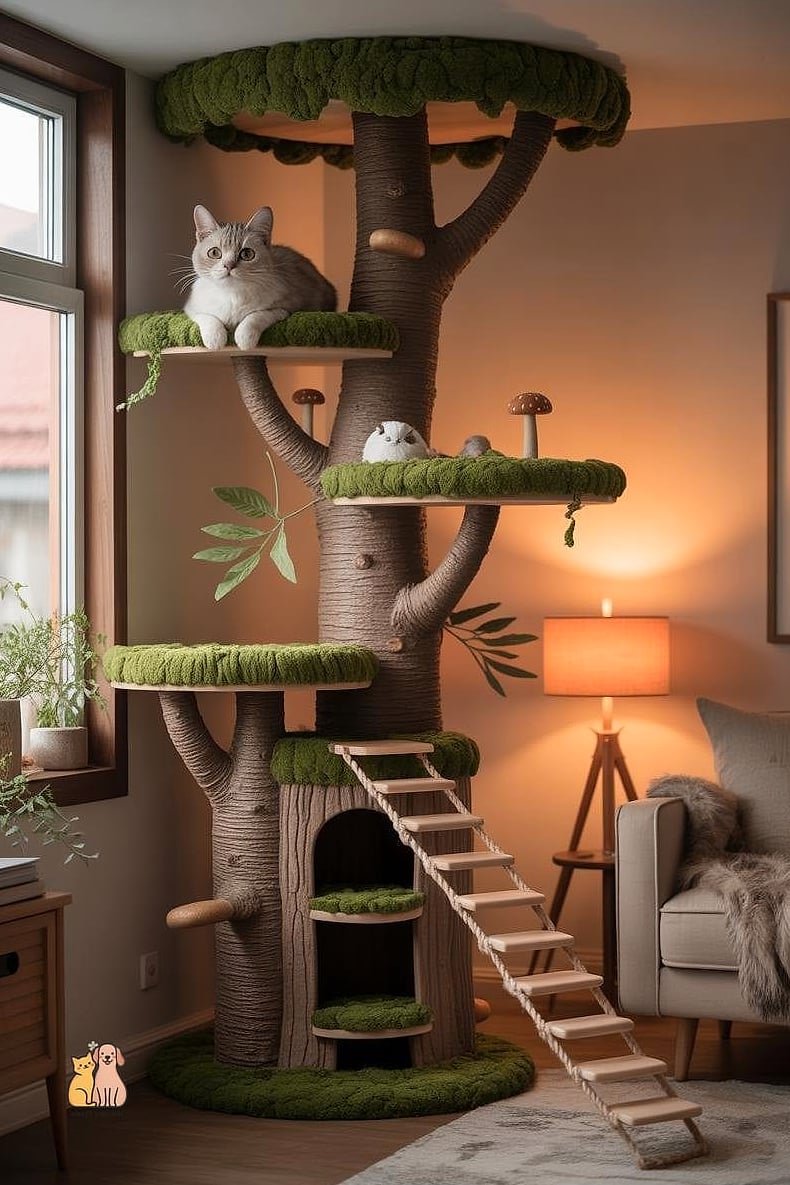
This all-in-one design combines climbing platforms with a lower-level spot for a food bowl or slow feeder, keeping mealtime and playtime in the same convenient area. It’s particularly handy in smaller bedrooms where you don’t have room for a separate feeding station.
Multi-cat households benefit from having a designated bottom-level feeding zone while the top stays reserved for lounging and observation. It also keeps food bowls off the floor near foot traffic.
This setup leans toward the pricier end since it includes more built-in features, but the convenience factor makes it one of the more practical picks if you’re tight on space.
Whichever of these cat tree bedroom ideas catches your eye, the real goal is giving your cat a spot that feels like theirs. A little vertical space goes a long way toward a happier, more settled cat — and honestly, a much calmer 3 a.m. for you too.