15 Genius Diy Cat Furniture You’ll Absolutely Love
- The Ladder Shelf Climbing Wall
- The Repurposed Bookshelf Cat Condo
- The Window Perch Hammock
- The Cardboard Castle Scratcher
- The Floating Cat Steps
- The PVC Pipe Cat Tunnel
- The Wine Crate Cubby Tower
- The Repurposed Ottoman Cat Bed
- The Hanging Sisal Rope Scratcher
- The Multi-Level Catio Extension
- The Drawer Unit Cat Bunk Beds
- The Rope and Wood Hanging Swing
- The Corner Wall Shelf Lounge
- The Log Slice Scratching Post
- The Repurposed Ladder Cat Tree
15 Genius Diy Cat Furniture You’ll Absolutely Love
If your cat treats every store-bought cat tree like it personally offended them, you’re not alone. Cats are weirdly picky about their furniture, and honestly, who can blame them? They spend most of their lives lounging, climbing, and scratching, so they deserve setups that actually fit their space and personality. Building your own cat furniture means you control the size, the style, and the budget, and your cat gets something built specifically for how they actually live. Here are fifteen DIY cat furniture ideas that real cat owners swear by.
The Ladder Shelf Climbing Wall
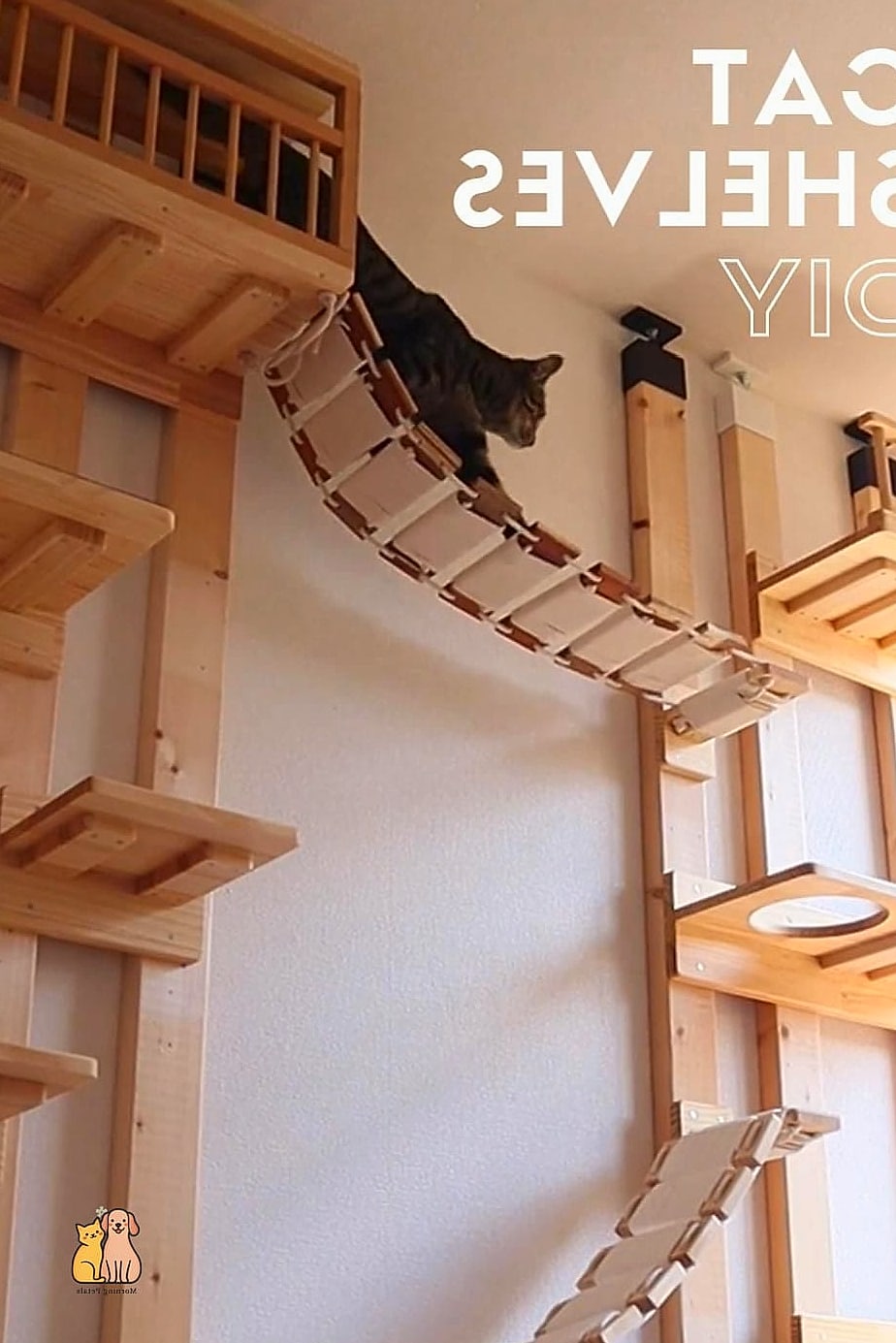
This one turns a blank wall into a vertical playground using a series of staggered wooden shelves that mimic a climbing ladder. Cats who love height, like Bengals or Abyssinians, tend to go absolutely wild for this setup. You’ll need floating shelf brackets, plywood, and some carpet or sisal rope for grip on the landing platforms.
It’s a weekend project for anyone comfortable with a drill and a stud finder. Budget-wise, you’re looking at under fifty dollars if you already have basic tools lying around. The best part is you can rearrange the shelves anytime your cat gets bored with the layout.
The Repurposed Bookshelf Cat Condo
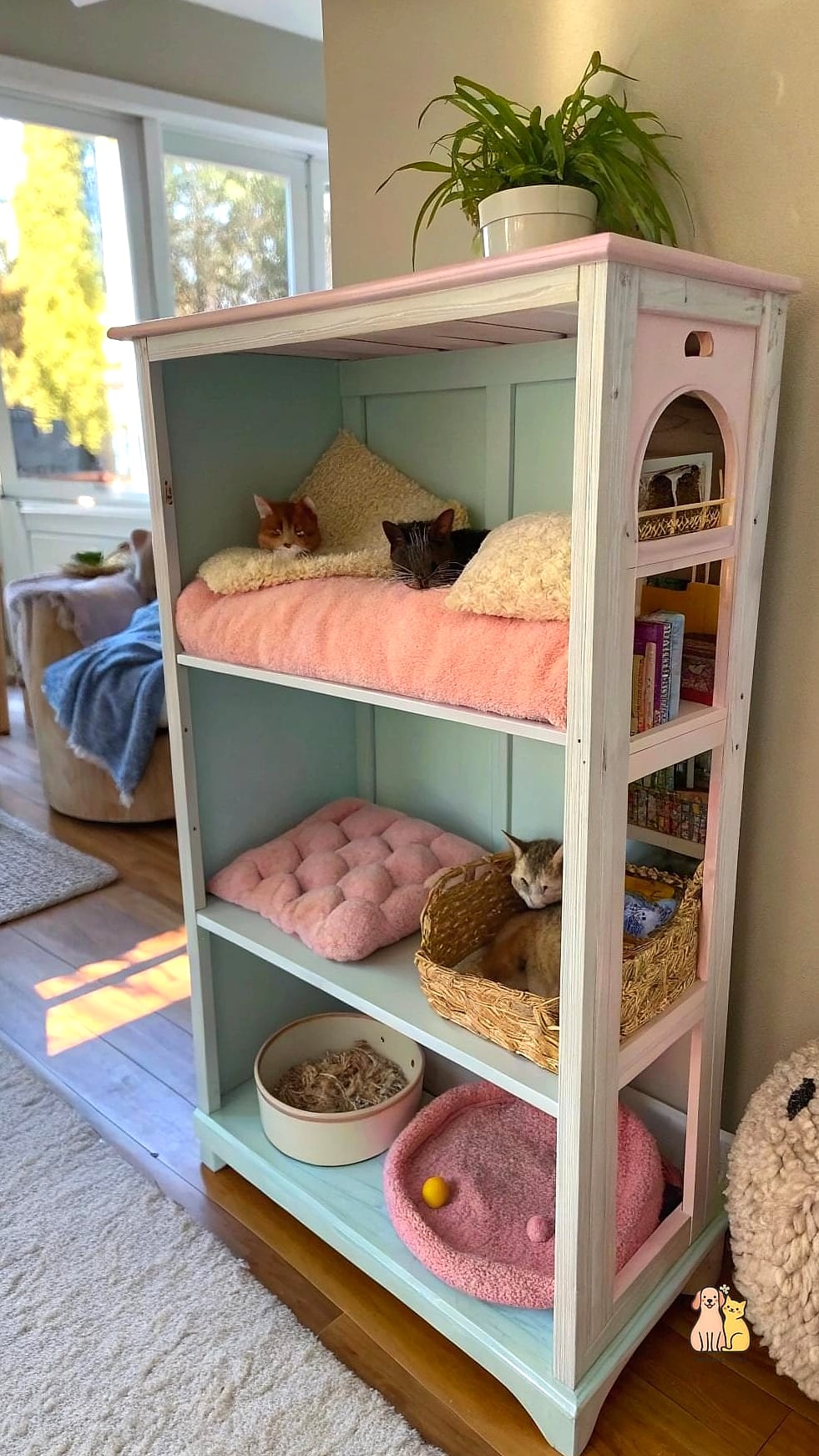
Old bookshelves are secretly perfect cat furniture waiting to happen. Cut a few circular entry holes into the sides, add soft bedding to each cube, and suddenly you’ve got a multi-level condo that looks intentional in your living room. This works especially well for apartment dwellers who don’t have floor space to spare.
Senior cats or those with joint issues do well here since the compartments are close together and don’t require big jumps. Add a layer of paint or wood stain to match your decor, and nobody will guess it used to hold your college textbooks.
The Window Perch Hammock
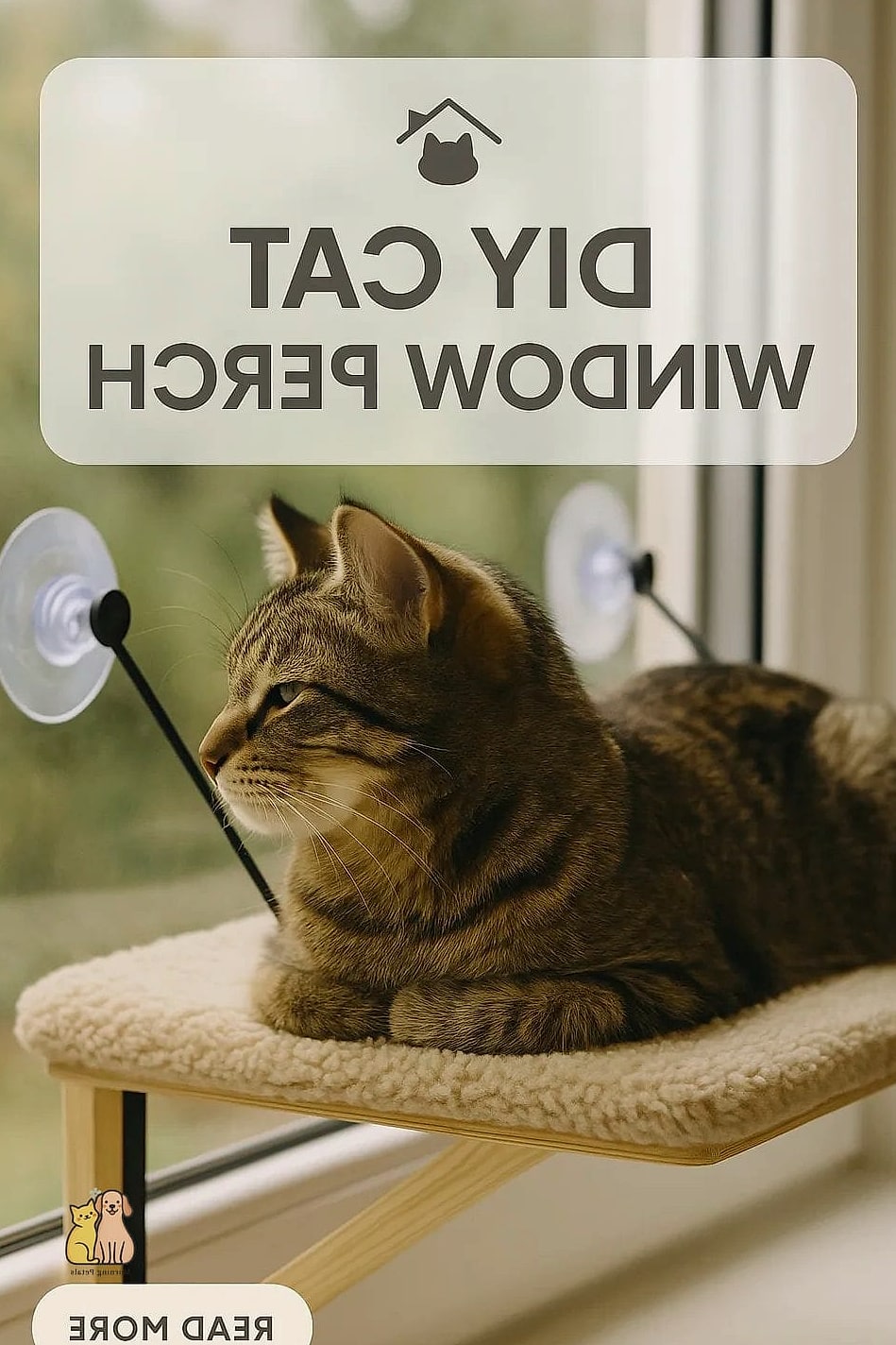
Cats are basically professional window-watchers, so a suction-cup or bracket-mounted hammock right at the glass is an easy win. This is one of the simplest builds on the list, using a wooden frame, canvas fabric, and heavy-duty mounting hardware rated for your cat’s weight.
It’s ideal for apartment cats who don’t get outdoor access but still want to supervise the neighborhood birds. Just double check the weight rating if you’ve got a chunkier cat, since a mid-nap collapse is nobody’s idea of fun.
The Cardboard Castle Scratcher
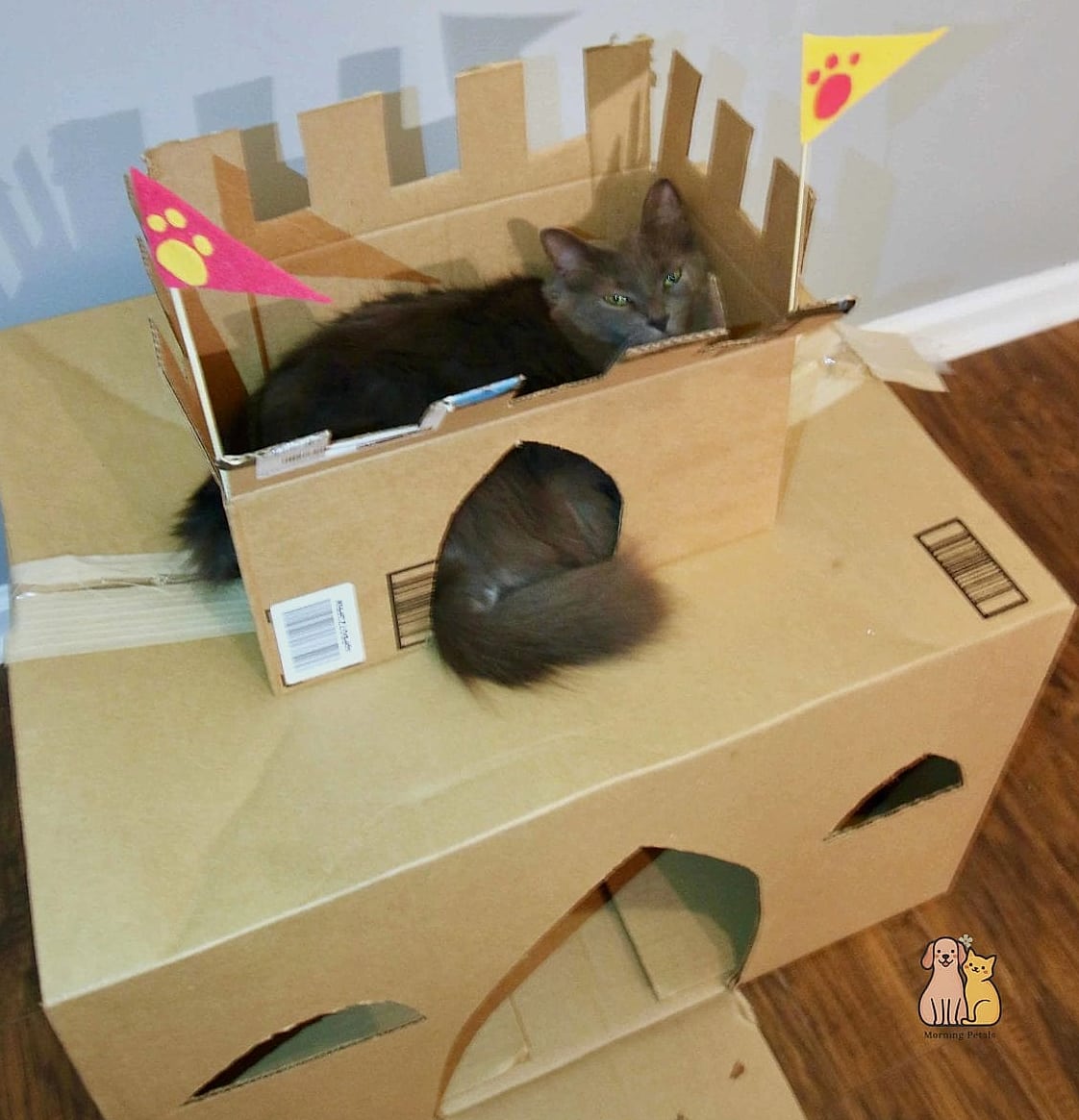
Cardboard is free, recyclable, and cats inexplicably love the texture for scratching. Stack and glue flattened boxes into a small castle shape with turrets and a scratching surface on the base. This is a genuinely low-cost project, perfect if you’re testing whether your cat even likes elevated furniture before investing more time.
Kittens and younger cats especially enjoy the crinkly sound and rough texture. It won’t last forever, but that’s kind of the point. When it gets shredded, you just build another one.
The Floating Cat Steps
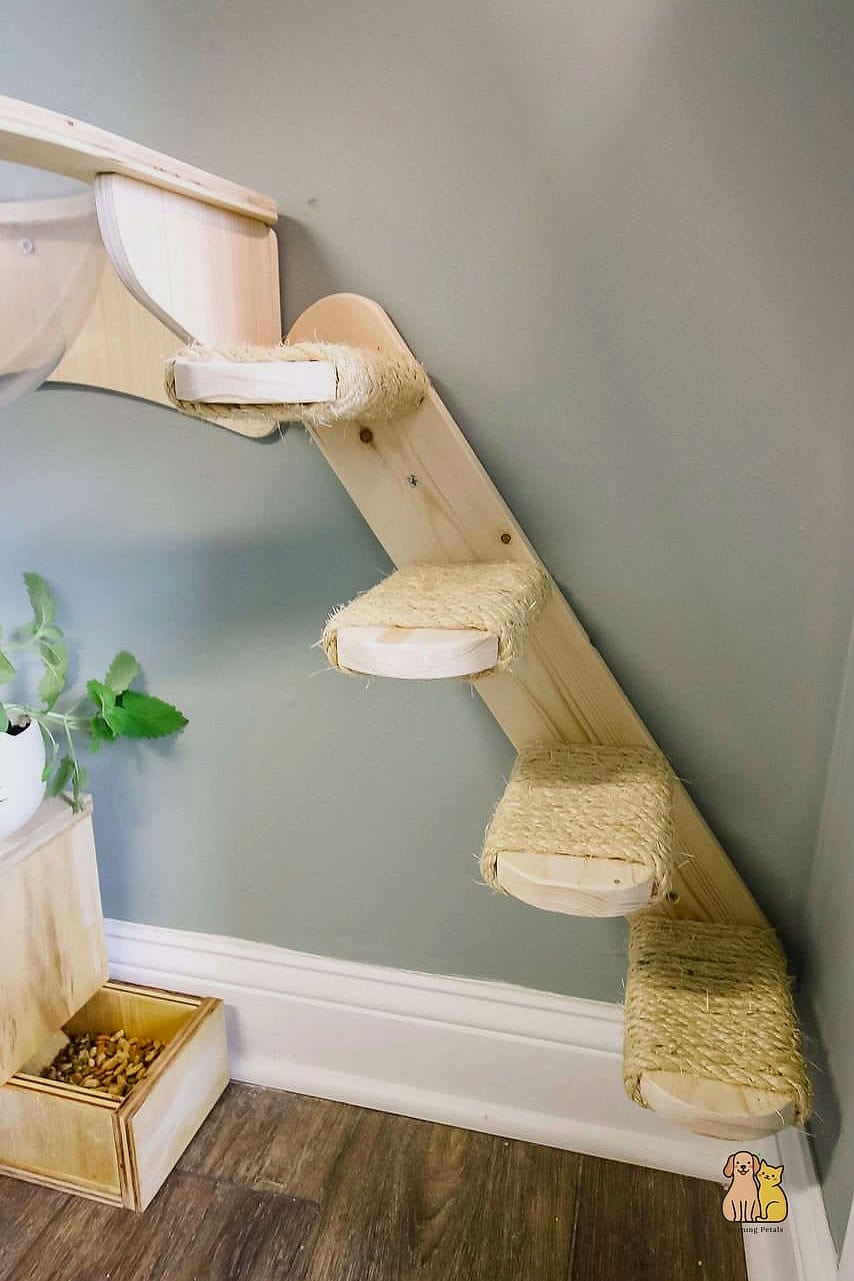
Instead of one big ladder, floating steps are individual wooden platforms mounted at increasing heights up a wall, leading to a window or high shelf. This staggered approach suits larger or less agile cats, including Maine Coons, who appreciate shorter jumps between levels.
Each step can be carpeted or covered in faux fur for grip and comfort. It’s a slightly more advanced build since you’re measuring and leveling multiple mounts, but the visual effect is genuinely striking once finished.
The PVC Pipe Cat Tunnel
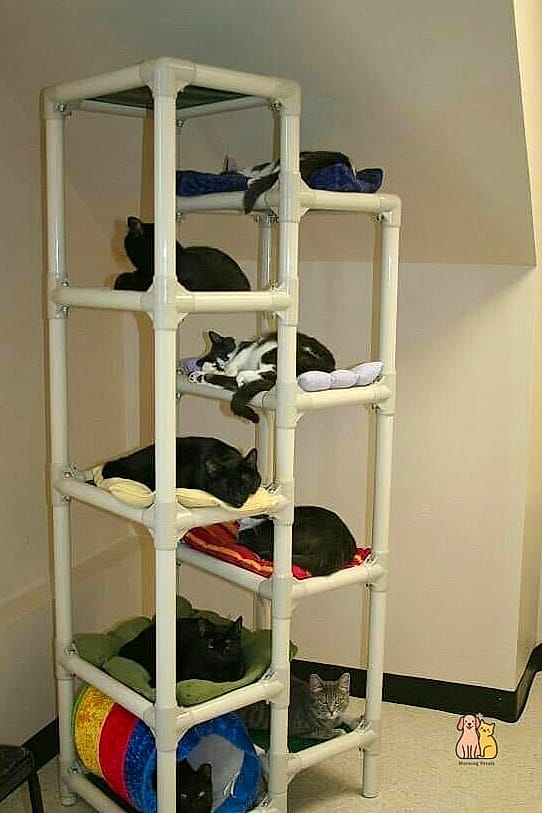
PVC piping wrapped in fleece or old fabric makes a surprisingly sturdy tunnel system that cats treat like their personal racetrack. This is great for playful, high-energy breeds like Siamese or Bengal cats who need outlets for zoomies.
You can connect multiple pipe sections with elbow joints to create twists and turns. It’s inexpensive, and if one section gets worn out, you just swap the fabric instead of rebuilding the whole thing.
The Wine Crate Cubby Tower
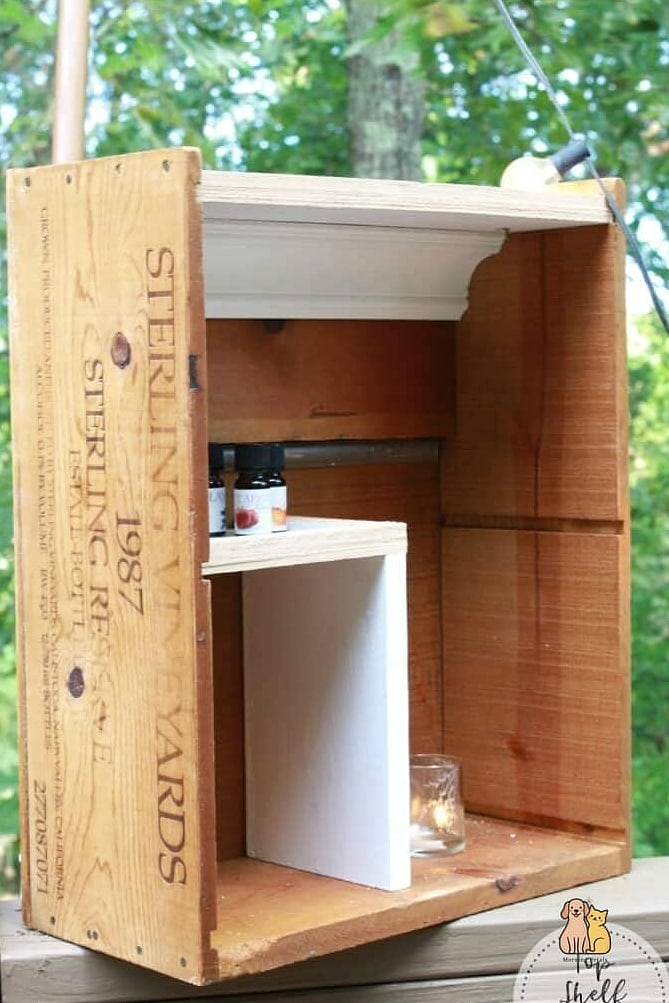
Stacked wooden wine crates, either purchased secondhand or built from scrap wood, create an instant tiered cubby system. Each crate becomes its own little den, which cats who like to hide and feel enclosed absolutely adore, including more anxious or shy cats.
Secure the crates to each other and to the wall for stability before your cat starts using it as a launching pad. Add a cushion inside each cube, and you’ve got a rustic-looking piece that doubles as actual furniture in your home.
The Repurposed Ottoman Cat Bed
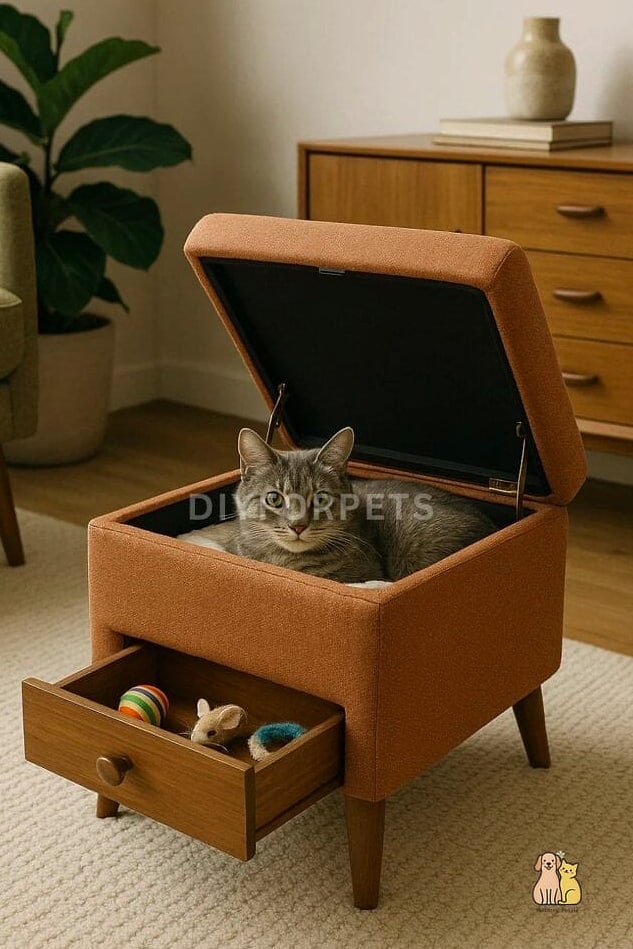
An old ottoman with removable cushions can become a hidden cat bed with minimal effort. Cut an entry hole in the side, line the inside with soft fabric, and you’ve got a cozy hideaway that also functions as a side table or footrest for humans.
This is a great option for households wanting furniture that doesn’t scream “this is for the cat.” Older or arthritic cats appreciate the low entry point since there’s no climbing required.
The Hanging Sisal Rope Scratcher
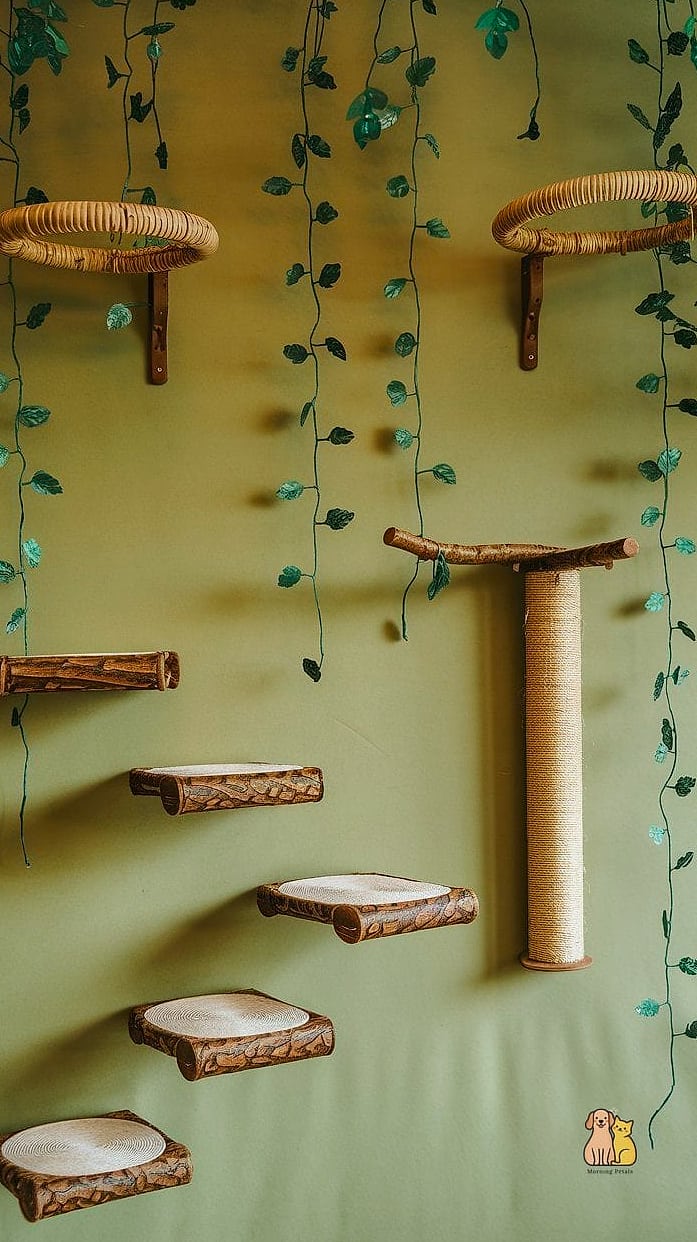
A thick length of sisal rope wound tightly around a wooden post or wall mount gives cats a vertical scratching surface that also looks intentional and tidy. This is one of the more budget-friendly builds, using materials you can find at most hardware stores.
Cats who scratch furniture out of instinct rather than boredom tend to redirect their behavior here quickly. Mount it near problem areas, like the corner of your couch, for the best results.
The Multi-Level Catio Extension
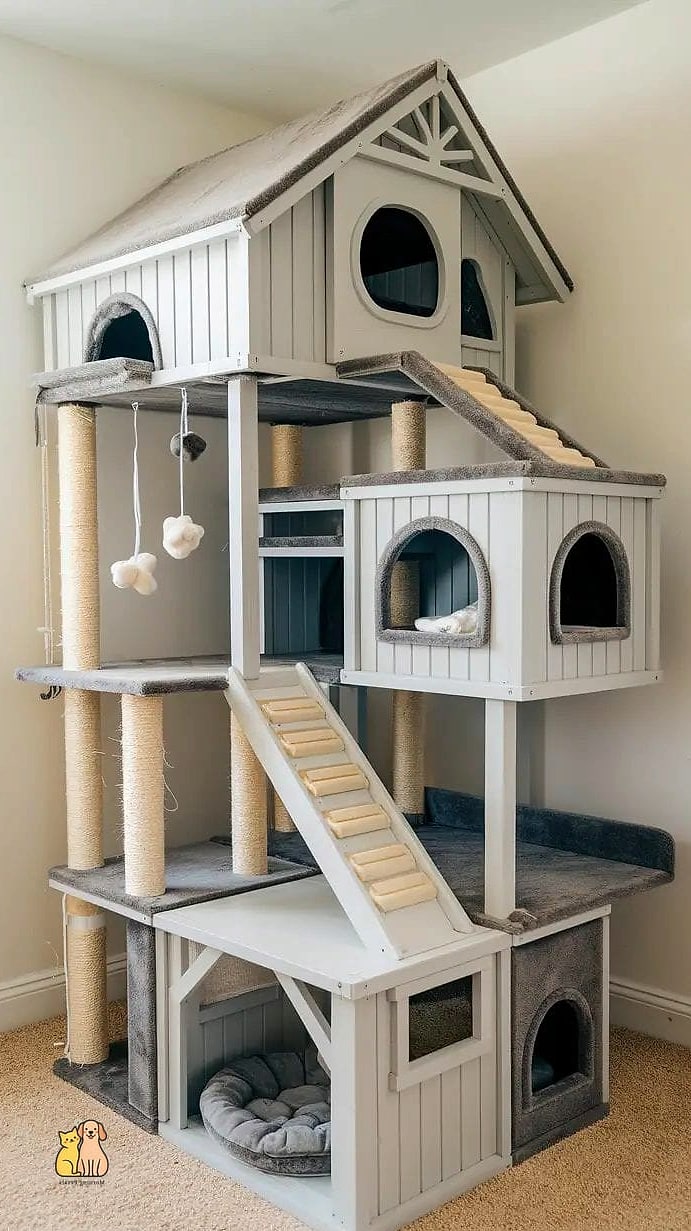
If you’ve got a window or door leading to a patio, a catio extension lets your indoor cat experience the outdoors safely. This is a bigger project involving mesh paneling, a wooden frame, and weatherproof sealant, but it’s worth it for cats who crave sunshine and fresh air without any escape risk.
It suits pretty much any breed, though cats with outdoor-hunting instincts especially benefit from the sensory stimulation. Add a few shelves inside for climbing, and maybe a shaded spot for hot afternoons.
The Drawer Unit Cat Bunk Beds
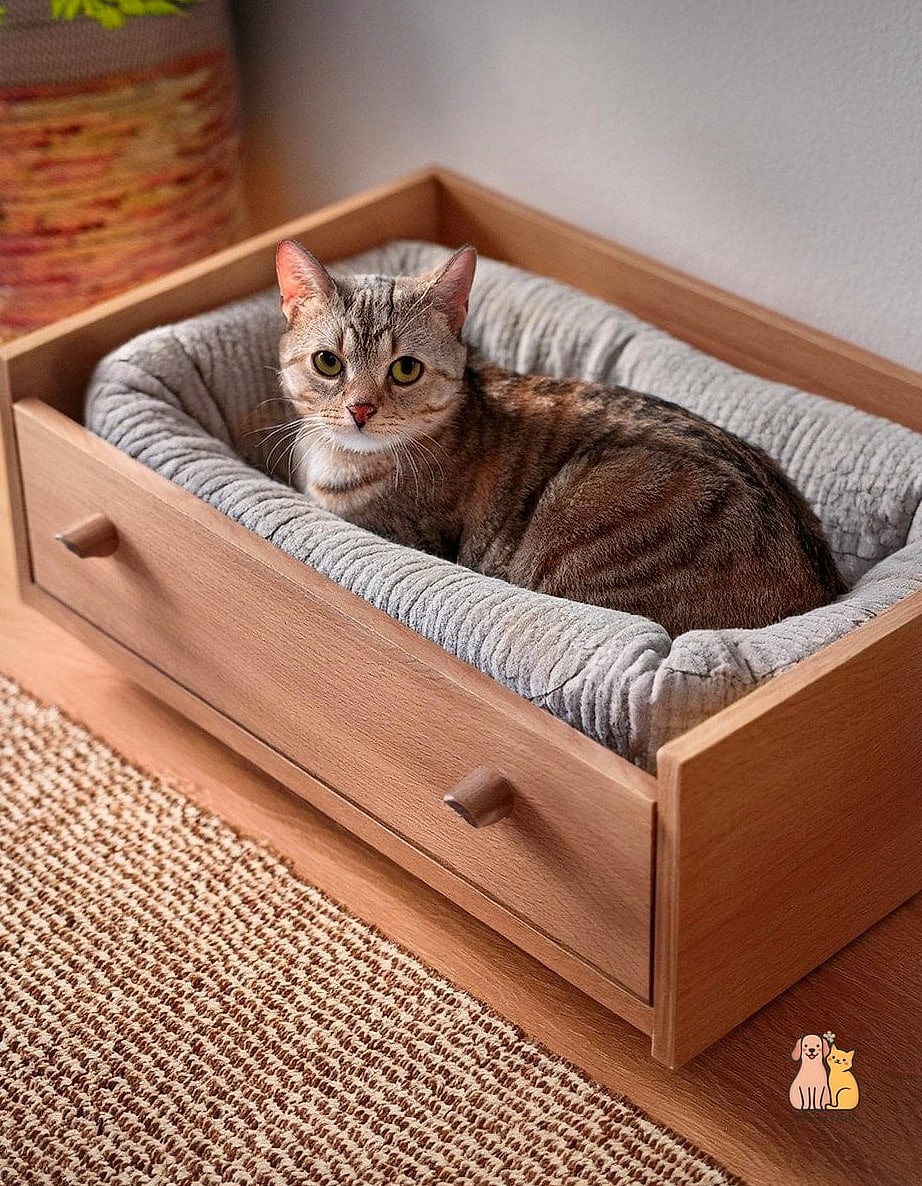
An old dresser can be transformed into bunk-bed-style cat housing by removing a few drawers and turning the openings into cozy nooks. Line each opening with fleece bedding, and you’ve got stacked bedrooms that multiple cats can use without fighting over territory.
This works particularly well in multi-cat households where personal space matters. It also keeps your floor space clear since everything is contained within one piece of furniture.
The Rope and Wood Hanging Swing
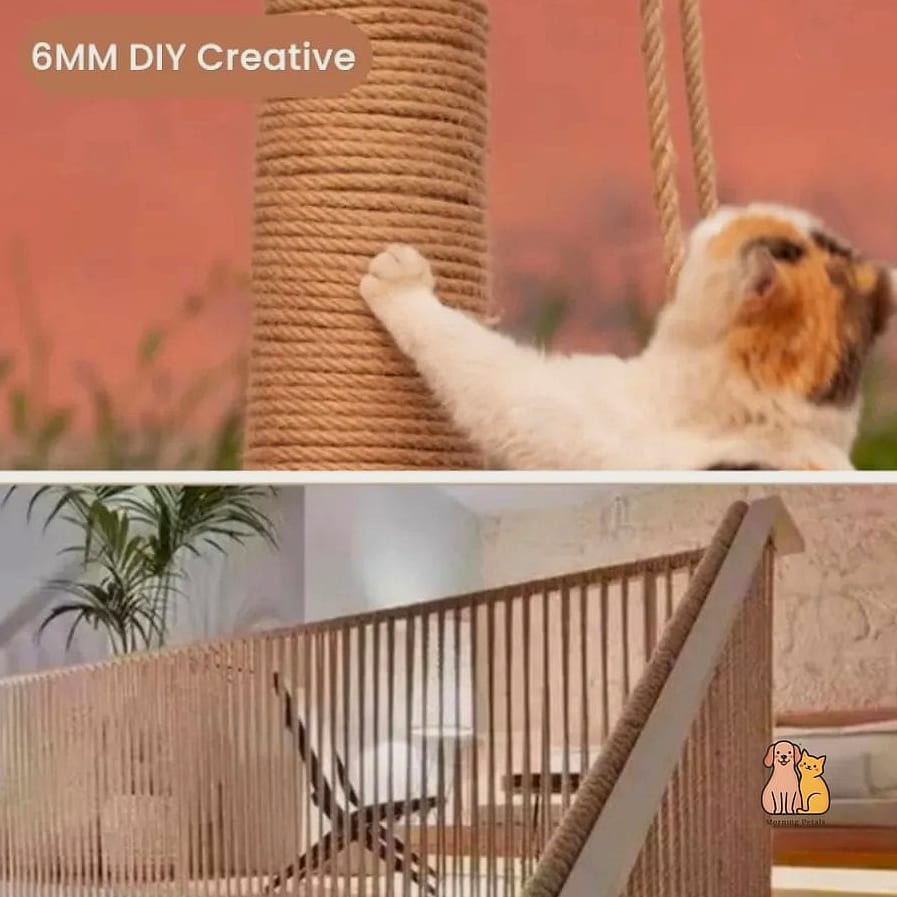
A wooden platform suspended from the ceiling by rope creates a swinging perch that cats treat like a floating throne. This build requires some ceiling anchor points rated for weight, so it’s a bit more involved, but the payoff is a genuinely unique piece nobody else has.
Confident, agile cats enjoy the slight movement, while more cautious cats might need time to trust it. Start it low to the ground until your cat gets comfortable.
The Corner Wall Shelf Lounge
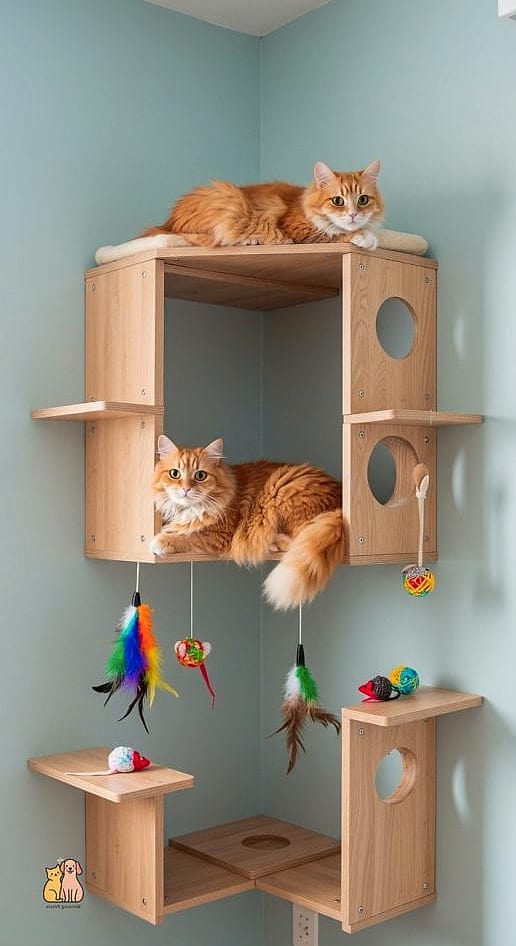
Instead of a full climbing structure, sometimes a single well-placed corner shelf with a cushioned top is all your cat wants. This minimalist build uses one bracket-mounted shelf, some outdoor-grade cushion foam, and fabric that matches your room.
It’s ideal for renters or anyone short on time, since it takes under an hour to install. Place it near a heating vent or sunny spot, and you’ll likely find your cat there more often than on any actual cat bed you’ve bought.
The Log Slice Scratching Post
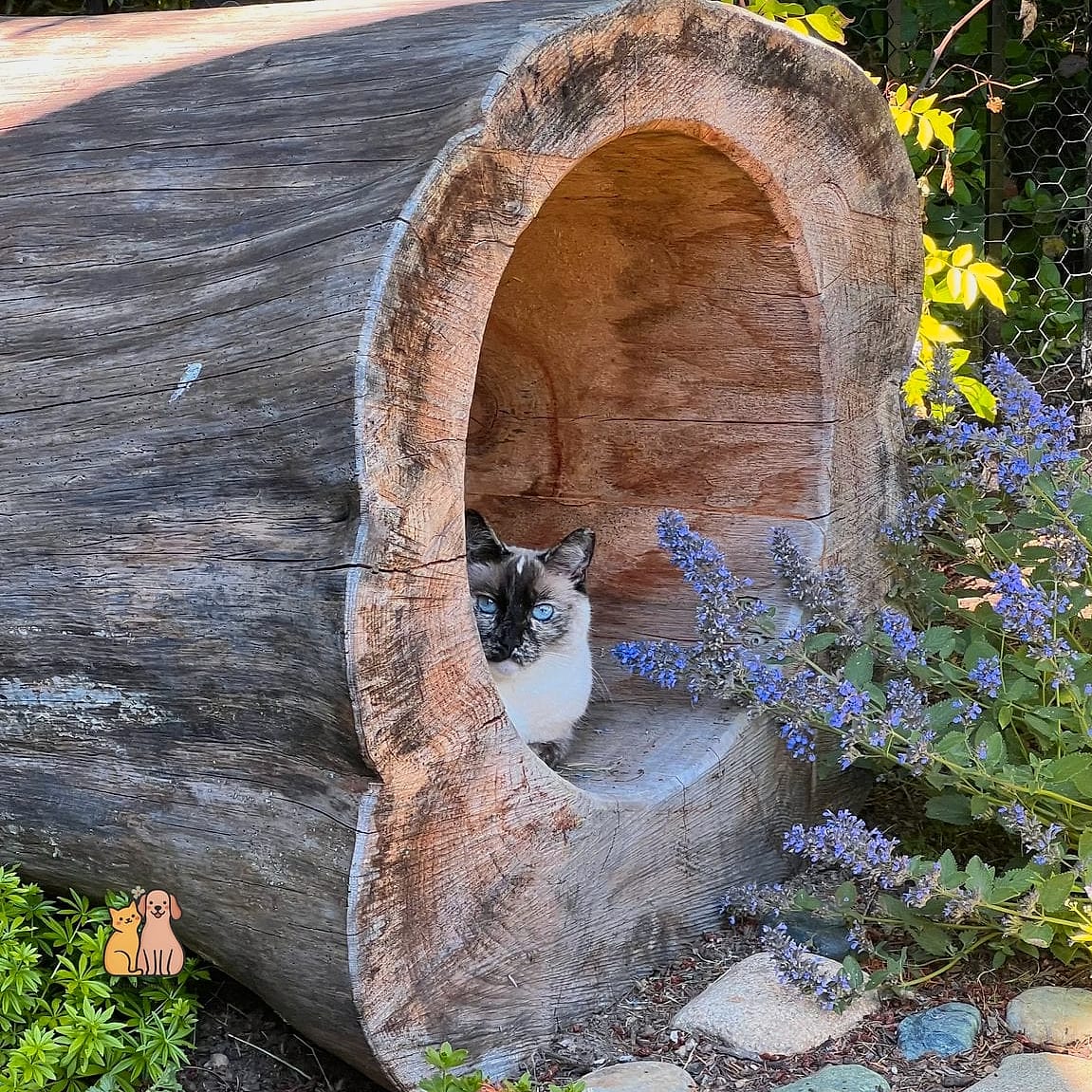
For a more natural look, a vertical log slice with the bark left on makes a rustic scratching post that doubles as a design piece. Mount it on a stable wooden base so it doesn’t tip when your cat leans into a good scratch session.
This suits outdoorsy households or anyone going for a cabin-inspired aesthetic. Cats seem to respond well to the natural bark texture, possibly because it mimics actual trees they’d scratch outside.
The Repurposed Ladder Cat Tree
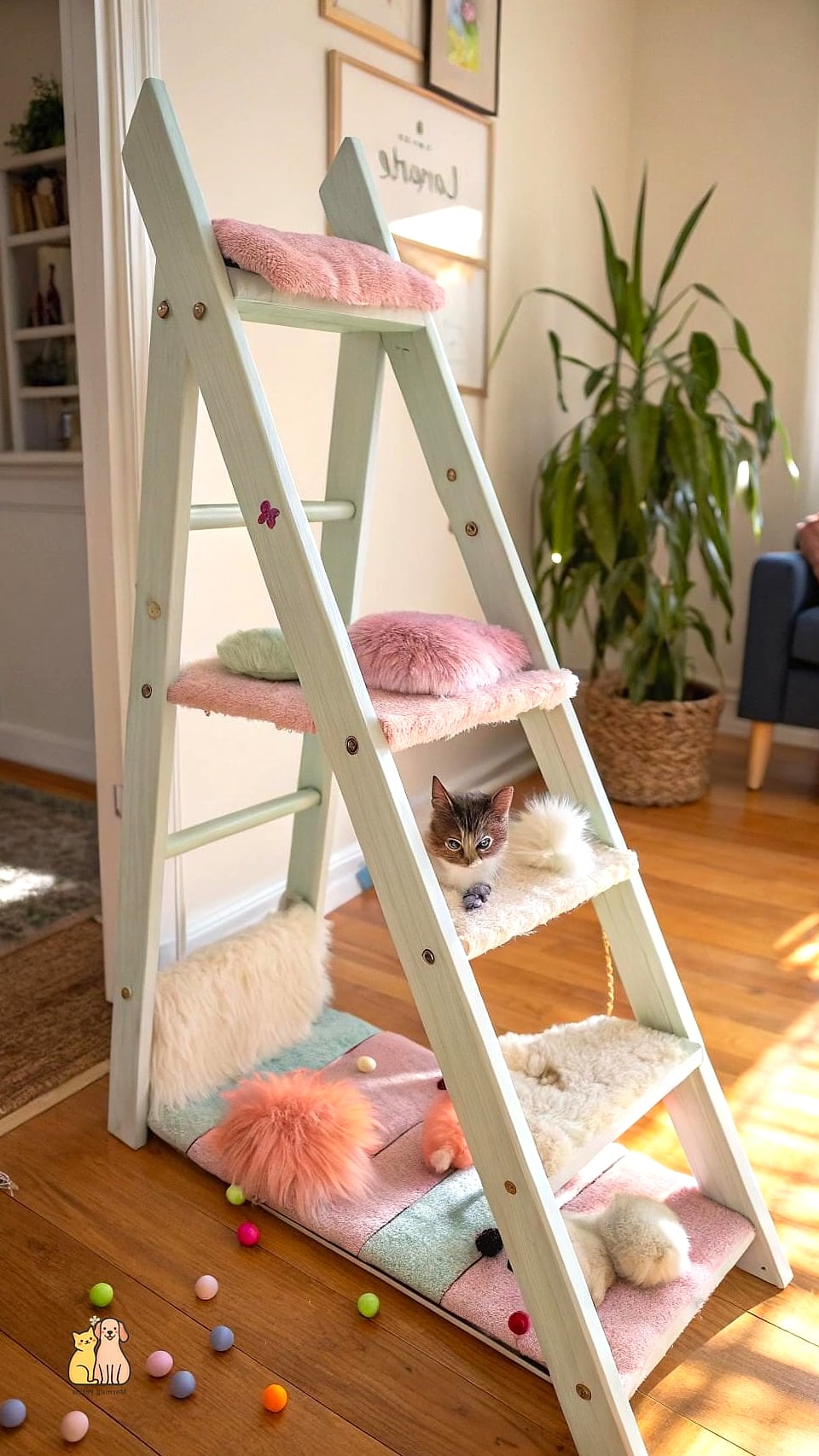
An old wooden step ladder can become a genuinely impressive cat tree with a bit of creativity. Add platforms between the rungs, wrap the legs in sisal rope, and hang a few dangling toys for extra enrichment. This piece works especially well in homes with high ceilings, since ladders naturally lend themselves to height.
It’s a mid-level project, and slightly wobbly ladders should be reinforced before use. The result is a statement piece that costs a fraction of what a comparable store-bought tree would run.
Building your own cat furniture is one of those projects that pays off way beyond the money you save. You end up with something that actually fits your space, matches your style, and gives your cat exactly the kind of climbing, scratching, or lounging spot they’ve been begging for. Start with whichever idea matches your tools and time, and don’t be surprised if your cat claims it within minutes of finishing.