30 Genius Cat Climbing Wall Ideas That Will Transform Your Home
- The Minimalist Floating Shelf Staircase
- The Cork Board Climbing Wall
- The Reclaimed Wood Ladder Wall
- The Carpeted Step Tower Against the Wall
- The Floating Cube Den Wall
- The Window-Adjacent Climbing Path
- The Industrial Pipe and Wood Shelf System
- The Rope-Wrapped Climbing Poles
- The Modular Honeycomb Wall
- The Bookshelf Integration Wall
- The Catio-Style Indoor Climbing Wall
- The Color-Blocked Kids Room Style Wall
- The Vertical Garden Climbing Wall
- The Staircase Wall Under an Actual Staircase
- The Full Wall Cat Superhighway
- The Hidden Litter Box Climbing Tower
- The Acrylic Floating Perch Wall
- The Log Slice Climbing Wall
- The Two-Tone Geometric Zigzag Wall
- The Hammock-Topped Climbing Wall
- The Scratcher-Integrated Wall System
- The Small Space Corner Climbing Wall
- The Faux Fur Lined Wall Shelves
- The Aquarium-Adjacent Climbing Wall
- The Bunk Bed Style Double Perch Wall
- The Repurposed Ladder Climbing Wall
- The Built-In Wall Nook System
- The Rotating Seasonal Decor Wall
- The Puzzle Feeder Climbing Wall
- The Ceiling-to-Floor Statement Wall
30 Genius Cat Climbing Wall Ideas That Will Transform Your Home
If your cat spends more time eyeing the top of your bookshelf than lounging on the couch, you already know the truth: cats need to climb. It’s not a phase, it’s not bad behavior, it’s just who they are. Giving them a proper vertical space to explore can cut down on scratched furniture, reduce boredom, and honestly make your home look pretty incredible too.
A cat climbing wall turns unused vertical space into a personal playground for your cat, and there are so many ways to design one that fits your style, your budget, and your cat’s personality. Whether you’ve got a shy indoor cat who likes to observe from up high or a bold climber who wants an obstacle course, there’s an idea here for you.
Let’s get into thirty genius cat climbing wall ideas that will transform your home.
The Minimalist Floating Shelf Staircase
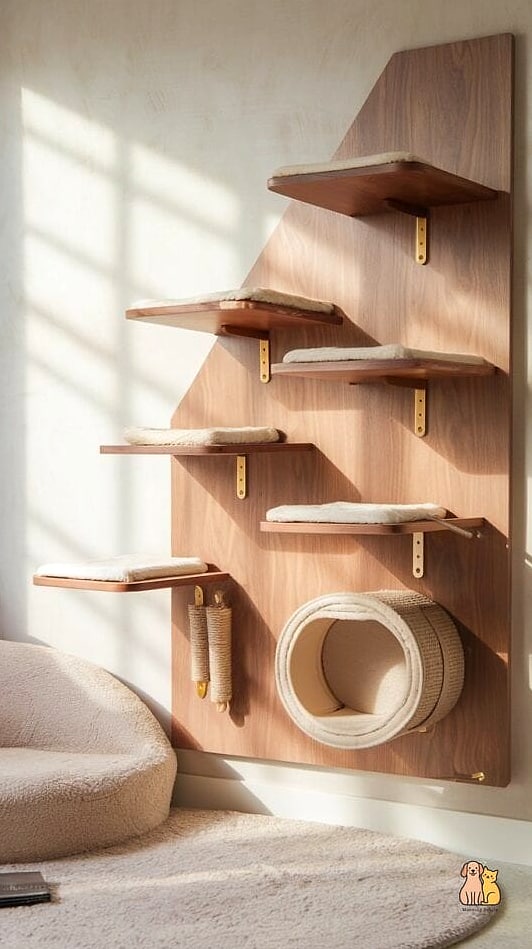
This one’s a favorite for apartment dwellers who want function without visual clutter. A series of small floating shelves staggered up the wall creates a staircase effect leading to a window or high perch. It suits sleek, modern homes and works especially well for older cats who need shorter jumps between steps. Budget-wise, you can build this with basic wood brackets and shelving from a hardware store for well under a hundred dollars.
The Cork Board Climbing Wall
Cork isn’t just for pinning notes anymore. Mounting large cork panels vertically gives cats a surface with natural grip for scratching and climbing, and it doubles as a scratch-friendly zone that saves your walls. This is a great DIY option for renters since cork panels are lightweight and easy to remove without damaging drywall.
The Reclaimed Wood Ladder Wall
If you love a rustic, farmhouse aesthetic, this idea uses reclaimed wood planks mounted at angles like a ladder climbing toward the ceiling. It’s sturdy, textured, and gives cats plenty of grip. This works best for confident jumpers and adds real character to a living room or hallway.
The Carpeted Step Tower Against the Wall
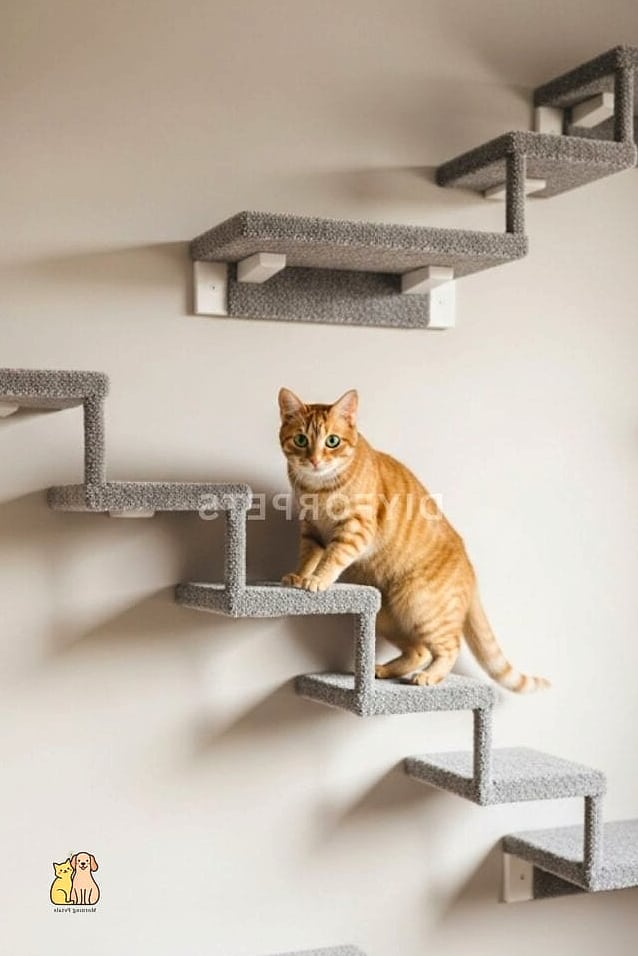
Instead of a freestanding cat tree, mount carpeted steps directly onto the wall in a zigzag pattern. This saves floor space while still giving your cat that familiar carpeted texture cats tend to love for scratching and kneading. It’s especially good for multi-cat households since several cats can use different steps at once.
The Floating Cube Den Wall
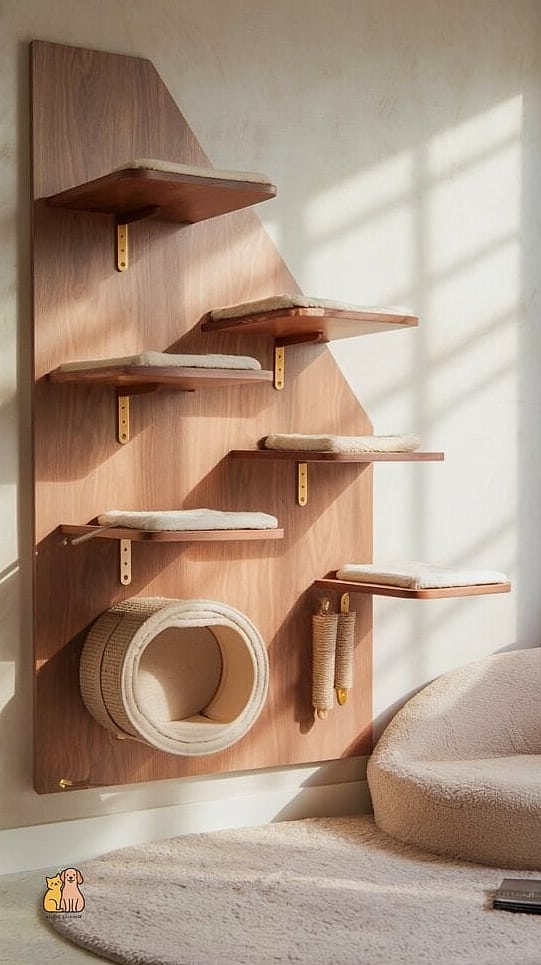
Wall-mounted wooden cubes with cutout entrances give cats little hideaway dens at different heights. Shy or anxious cats often gravitate toward enclosed spaces like these because they feel safe while still being able to survey the room. Paint the cubes to match your wall color for a built-in look, or go bold with contrasting colors as a design statement.
The Window-Adjacent Climbing Path
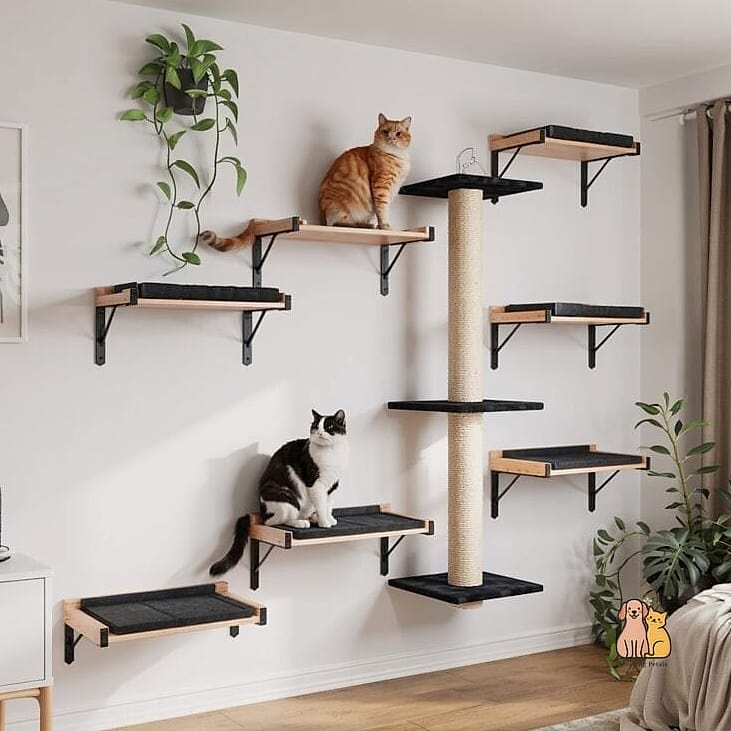
Position a climbing wall right beside a window so the top perch lines up with the view outside. Cats are natural bird watchers, and this setup turns window time into an enrichment activity. Add a soft cushioned platform at the top so they can settle in for hours of birdwatching.
The Industrial Pipe and Wood Shelf System
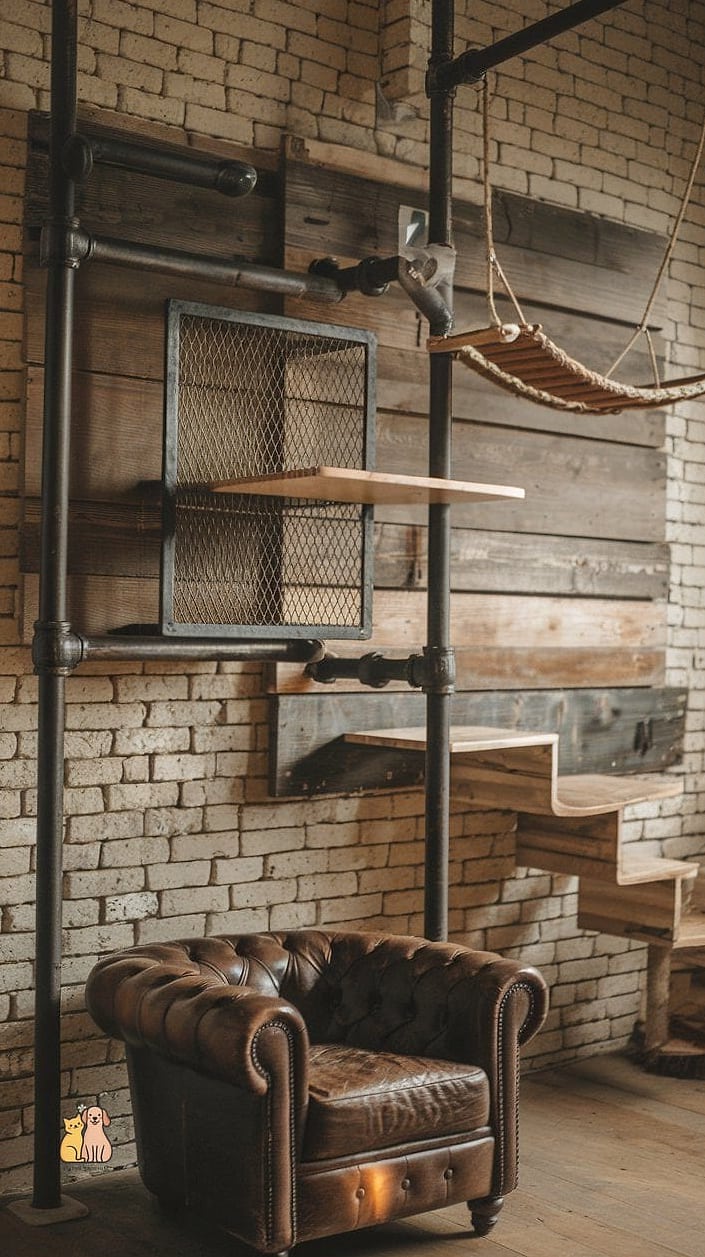
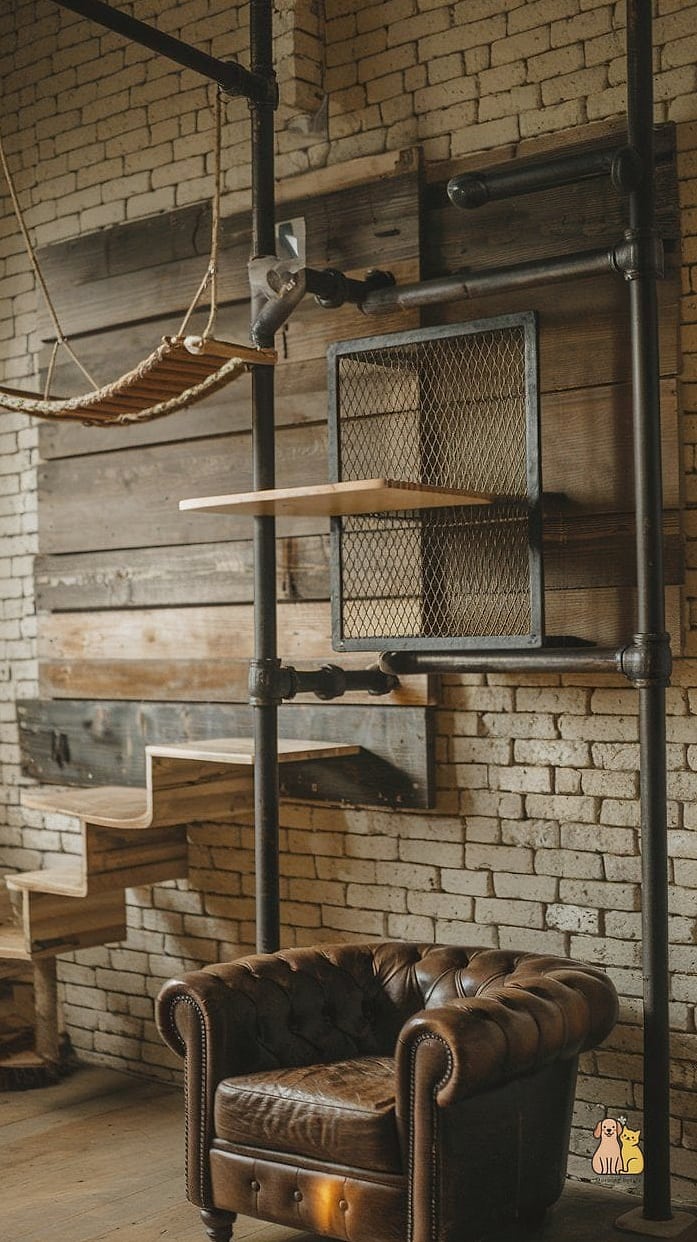
For a loft-style home, black pipe brackets paired with wood plank shelves create an industrial-chic climbing wall that looks like it belongs in a design magazine. It’s sturdy enough for larger breeds like Maine Coons and gives a strong, masculine edge to the decor if that’s the vibe you’re going for.
The Rope-Wrapped Climbing Poles
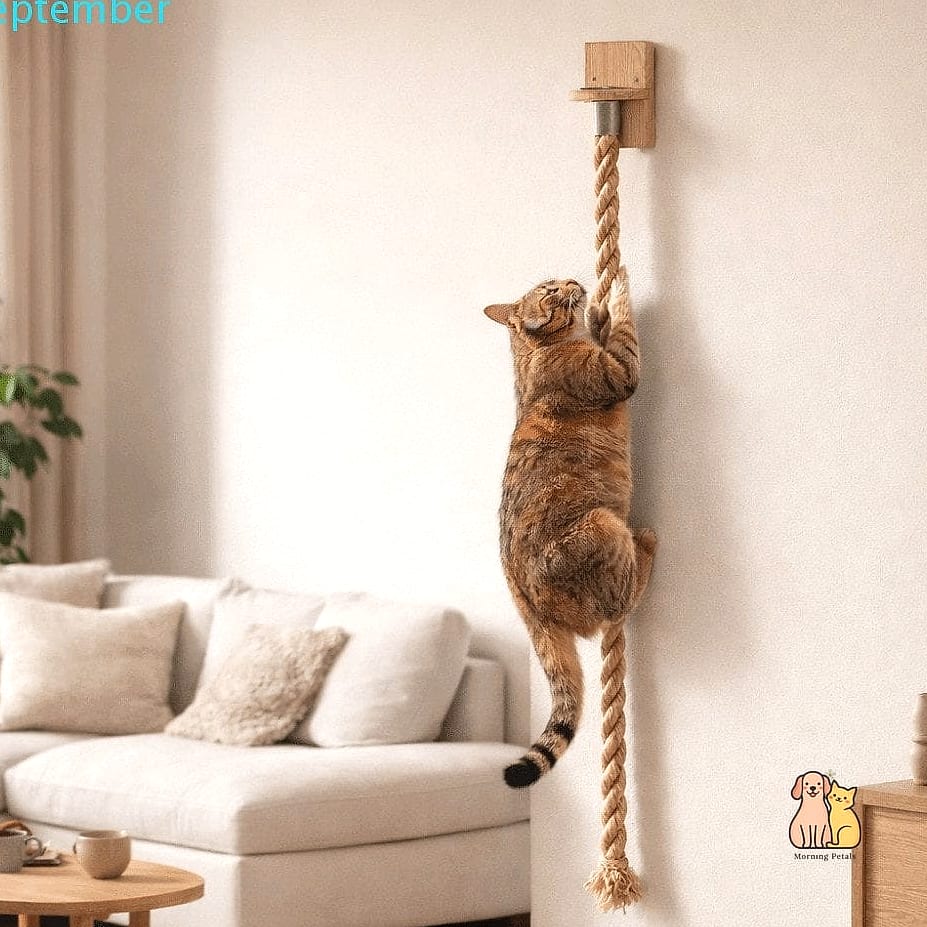
Vertical poles wrapped in sisal rope mounted from floor to ceiling give cats a natural scratching climb, similar to a tree trunk. This is ideal for high-energy cats who need a workout, and the rope texture tends to be gentler on paws than rough wood.
The Modular Honeycomb Wall
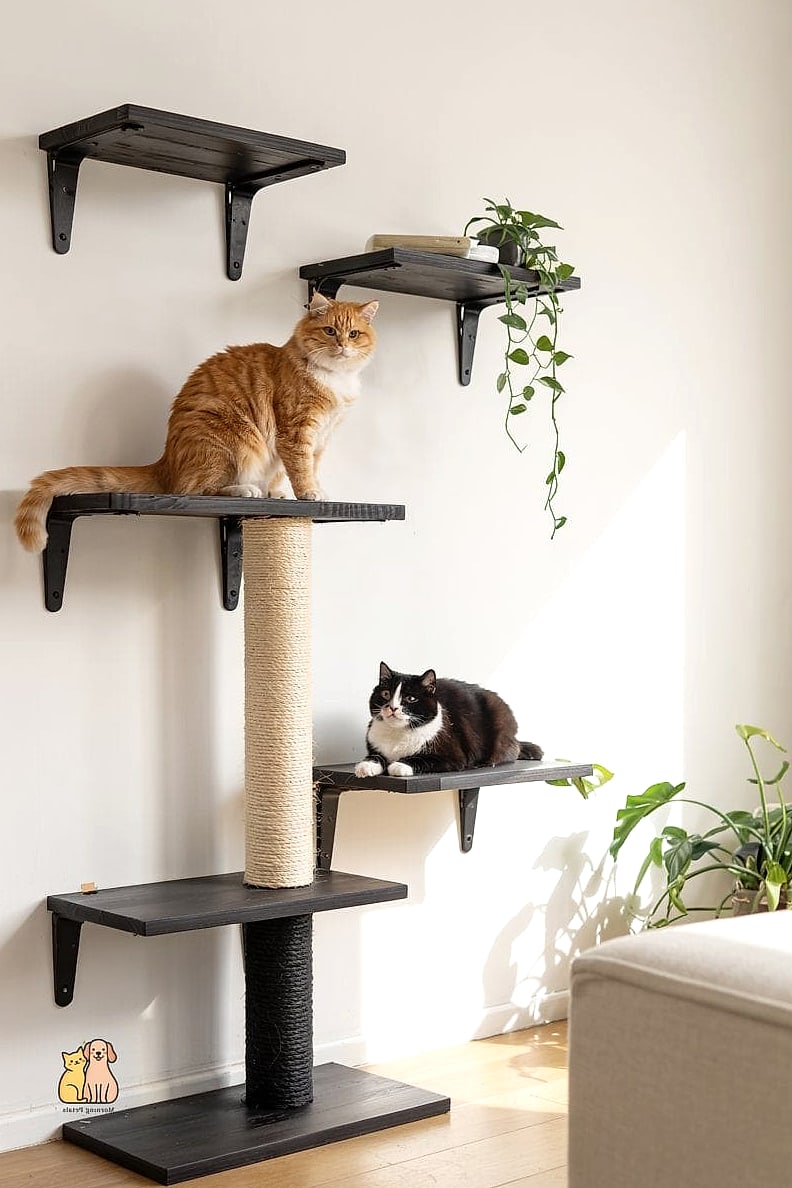
Hexagon-shaped wall shelves arranged in a honeycomb pattern let you customize the climbing path as your cat’s needs change. Add or remove hexagons over time, or rearrange them entirely. This is a fun weekend DIY project using precut hexagon shelves from a craft or home store.
The Bookshelf Integration Wall
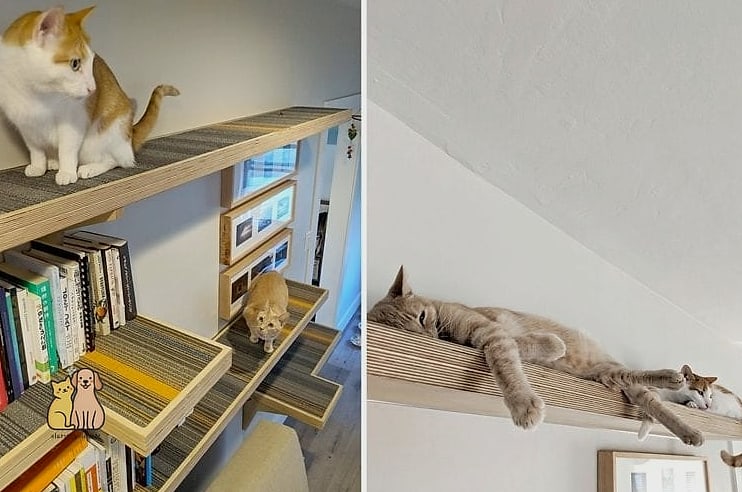
If you already have a tall bookshelf, add small side-mounted steps or perches that connect the shelf to a higher climbing area. This is a smart budget option since you’re building onto furniture you already own rather than starting from scratch.
The Catio-Style Indoor Climbing Wall
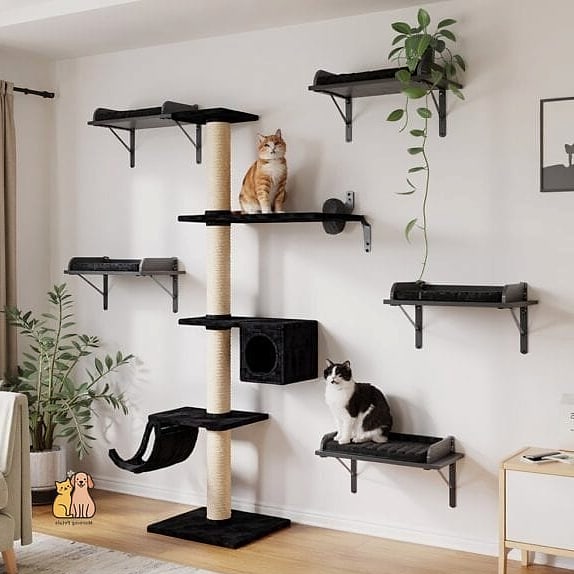
Inspired by outdoor catio enclosures, this indoor version uses mesh-backed shelving and tunnels attached to the wall for a semi-enclosed climbing experience. It gives cats a sense of security while climbing and works particularly well in homes with dogs or young kids where a bit of separation helps.
The Color-Blocked Kids Room Style Wall
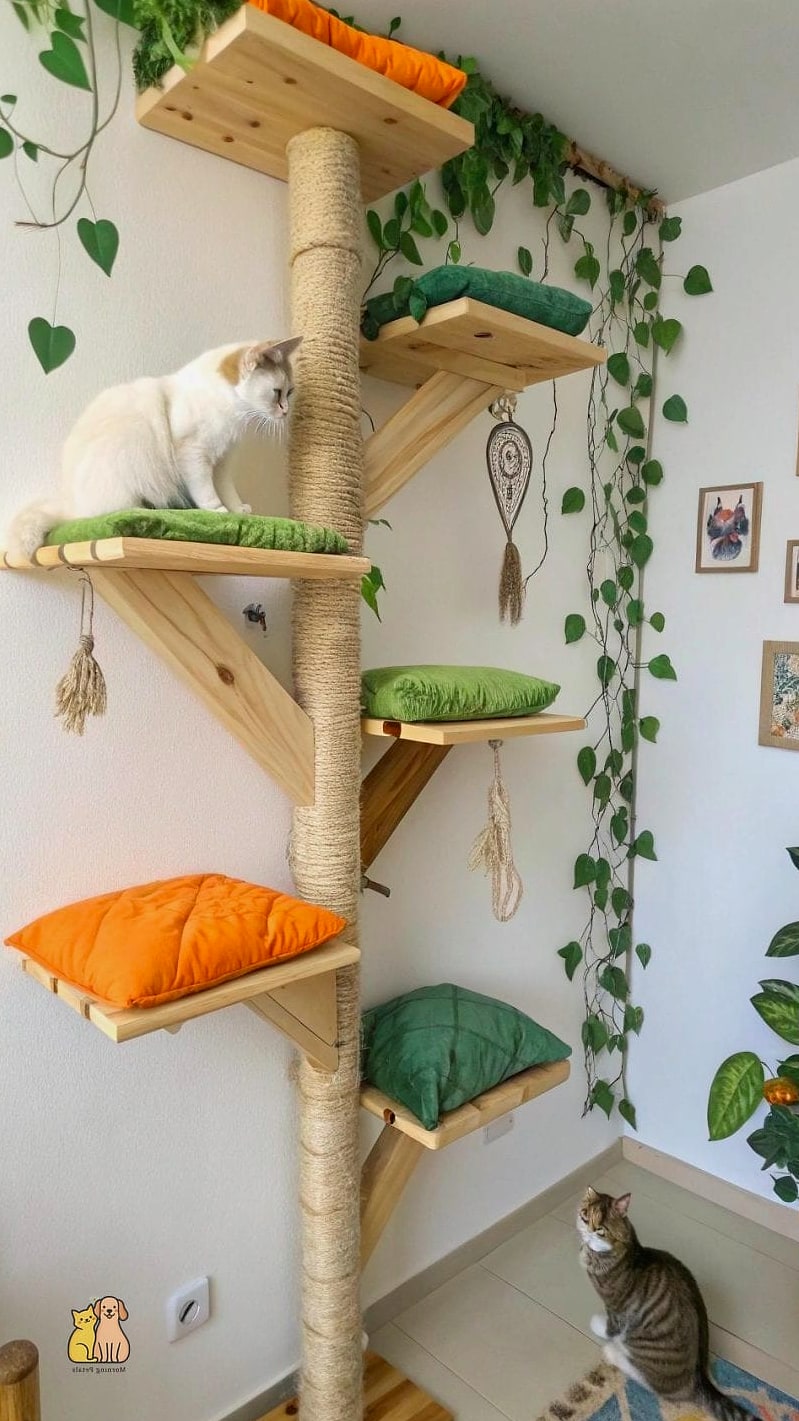
Bright, playful colored shelves in triangle or geometric shapes turn a climbing wall into a piece of art. This idea suits homes with a fun, eclectic style and is especially popular in homes where the cat’s space is in a shared room like a home office or playroom.
The Vertical Garden Climbing Wall
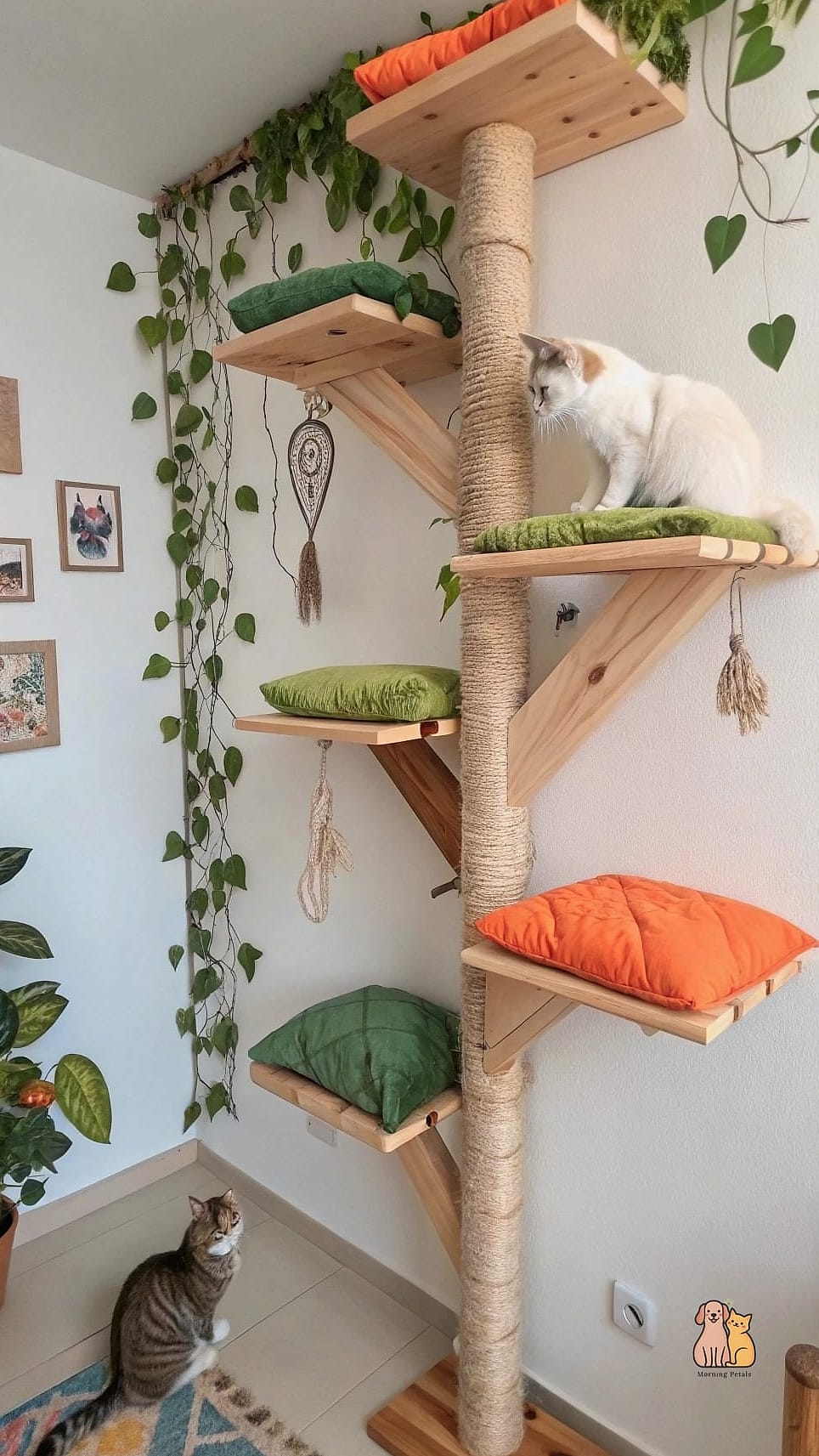
Combine climbing shelves with hanging planters of cat-safe greenery like cat grass or spider plants. Just make sure any plants included are non-toxic to cats, since curious climbers will absolutely take a nibble. This idea brings a fresh, natural feel to the room while giving your cat something to sniff along the way.
The Staircase Wall Under an Actual Staircase
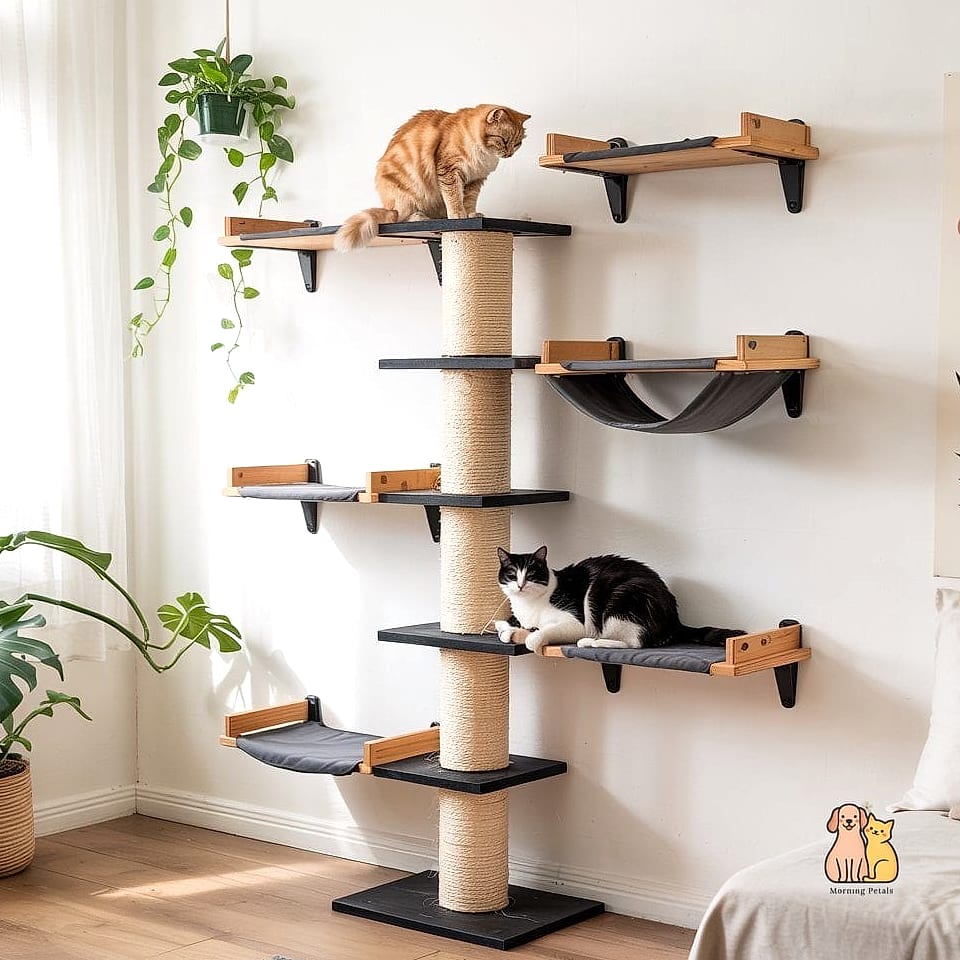
That awkward triangular space under a staircase is often wasted, but it’s perfect for a mini climbing wall with shelves that follow the slope. This is a clever space-saving idea for smaller homes where every inch matters.
The Full Wall Cat Superhighway
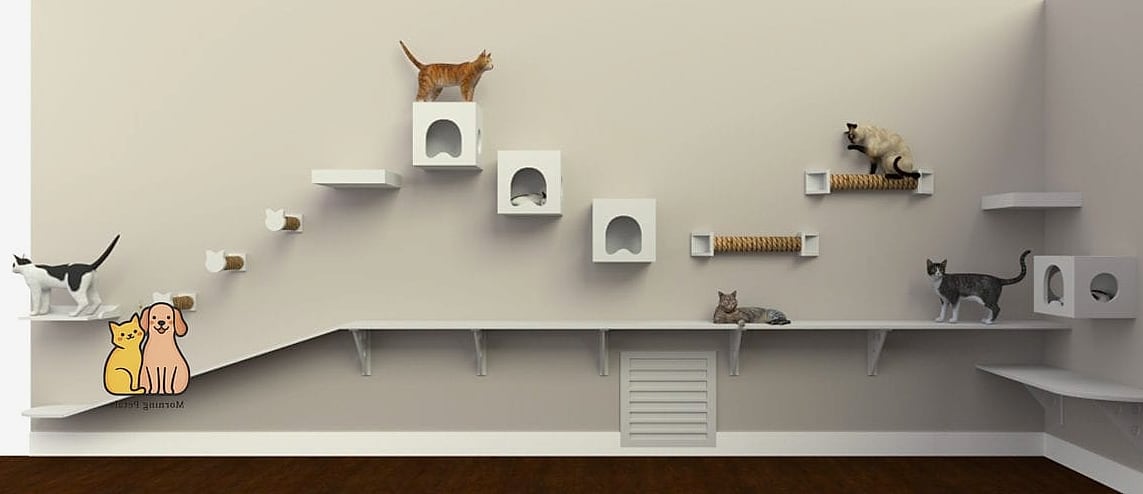
For the truly dedicated cat parent, this design covers an entire wall with a connected series of shelves, bridges, tunnels, and perches that let your cat travel the length of a room without touching the floor. It’s a bigger investment but an incredible enrichment feature for multi-cat households or high-energy breeds like Bengals.
The Hidden Litter Box Climbing Tower

Combine function and form by building a climbing wall that starts at a furniture piece hiding the litter box and leads upward to a perch. This is a genius small-apartment solution that tackles two cat needs in one footprint.
The Acrylic Floating Perch Wall
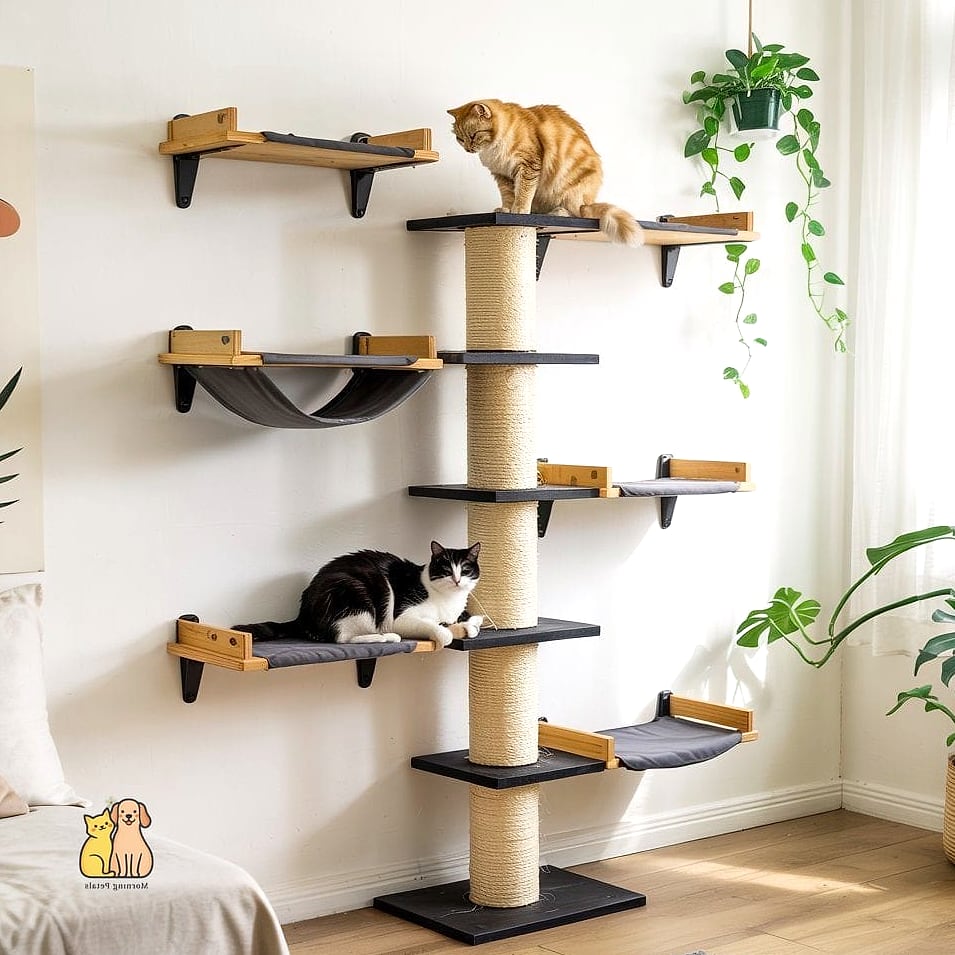
Clear acrylic shelves mounted with hidden brackets create a “floating cat” illusion since the shelves are nearly invisible from a distance. This modern idea is a showstopper for design-forward homes, though it works best for calmer cats since acrylic can be slippery without added grip mats.
The Log Slice Climbing Wall
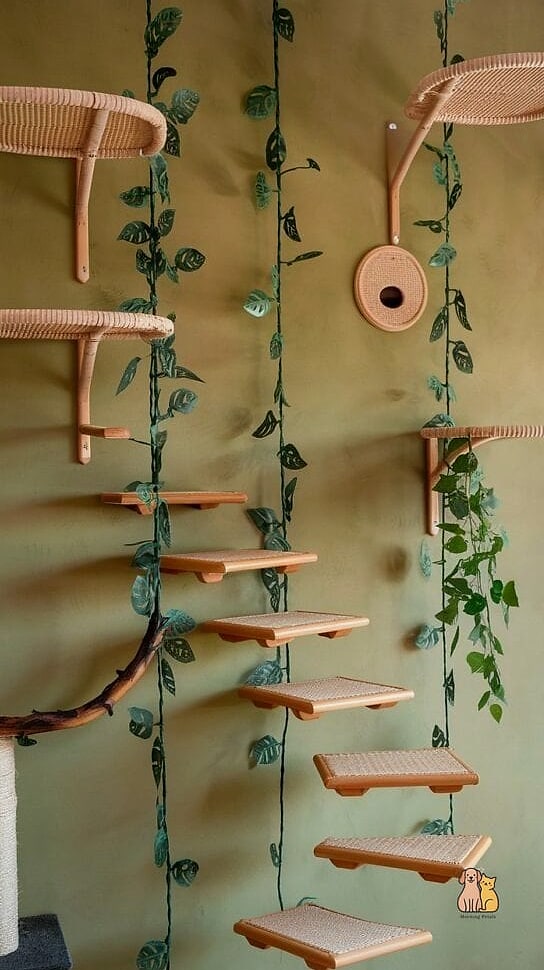
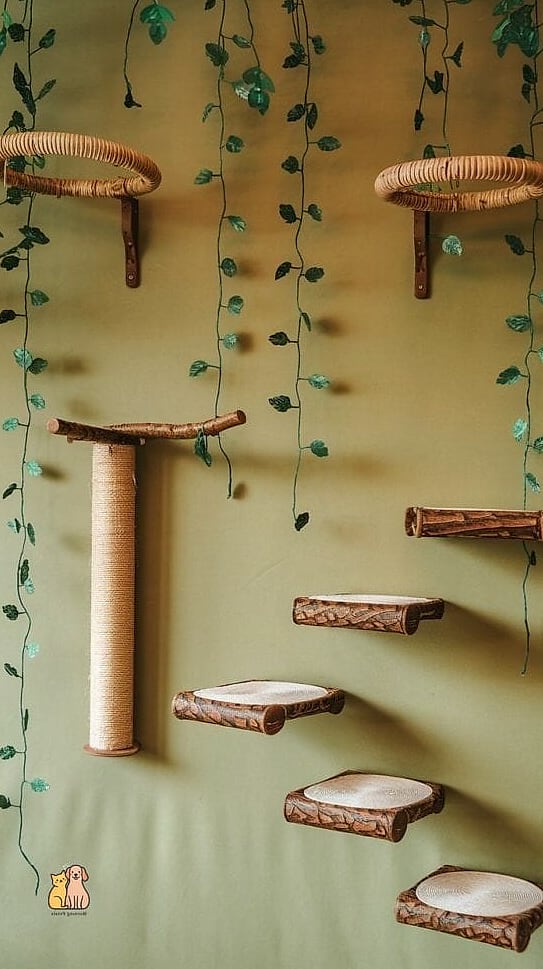
Mounted slices of real or faux tree trunk create a natural, woodsy climbing wall that looks stunning in cabin-style or nature-inspired homes. The uneven surfaces mimic outdoor climbing, which many cats find instinctively appealing.
The Two-Tone Geometric Zigzag Wall
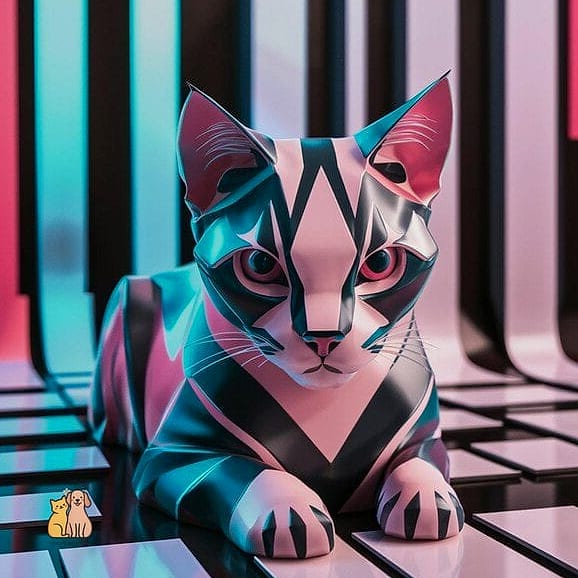
Alternating shelf colors in a zigzag climbing pattern creates a bold visual anchor in a room while giving cats a clear, easy-to-follow path upward. This works particularly well in nurseries-turned-playrooms or any space where the cat wall doubles as art.
The Hammock-Topped Climbing Wall
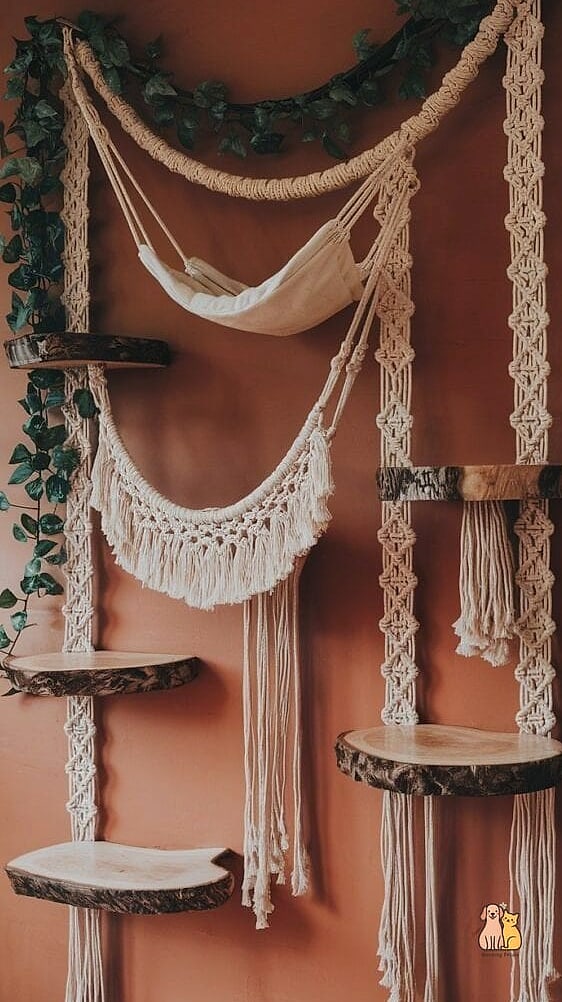
Add a wall-mounted hammock at the top of a climbing path for a cozy landing spot. Cats love hammocks because they gently cradle their body weight, and this makes a wonderful reward at the top of a climb for cats who love to nap in odd positions.
The Scratcher-Integrated Wall System
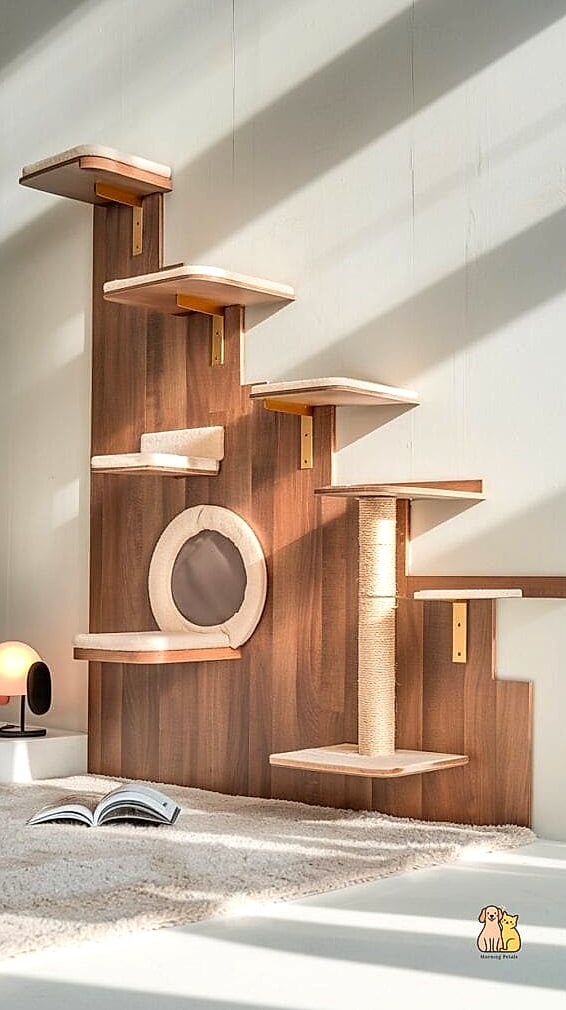
Combine vertical scratch posts directly into the climbing wall structure so cats can stretch, scratch, and climb all in the same spot. This is especially helpful for households trying to redirect scratching away from couches and toward a designated space.
The Small Space Corner Climbing Wall
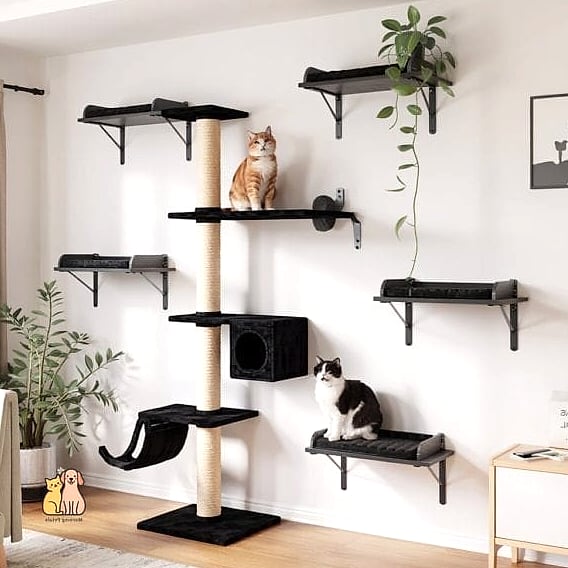
Instead of a full wall, this idea uses a single corner with angled shelves zigzagging between two walls. It’s an excellent solution for studio apartments or small bedrooms where floor space is tight but vertical space in a corner often goes unused.
The Faux Fur Lined Wall Shelves
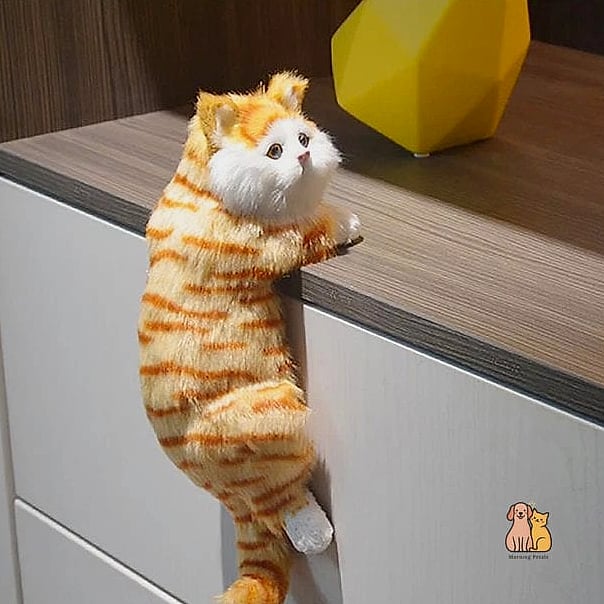
Adding plush faux fur to shelf surfaces gives your cat a soft, warm spot to curl up between climbs. This idea is especially loved by senior cats or breeds with thinner coats who appreciate extra coziness at nap time.
The Aquarium-Adjacent Climbing Wall
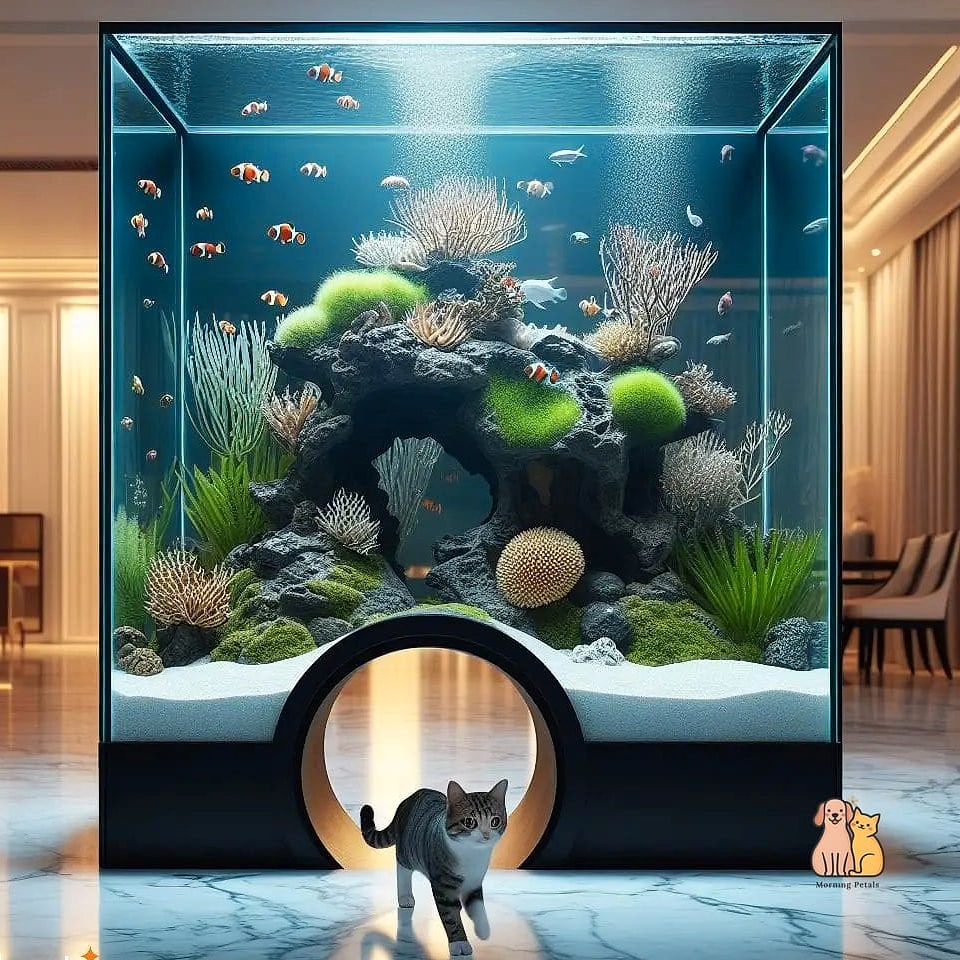
Position a climbing wall near a fish tank (with proper barriers in place) so your cat has a supervised viewing spot. Cats are endlessly entertained by moving fish, and this setup satisfies that curiosity in a safe, contained way.
The Bunk Bed Style Double Perch Wall
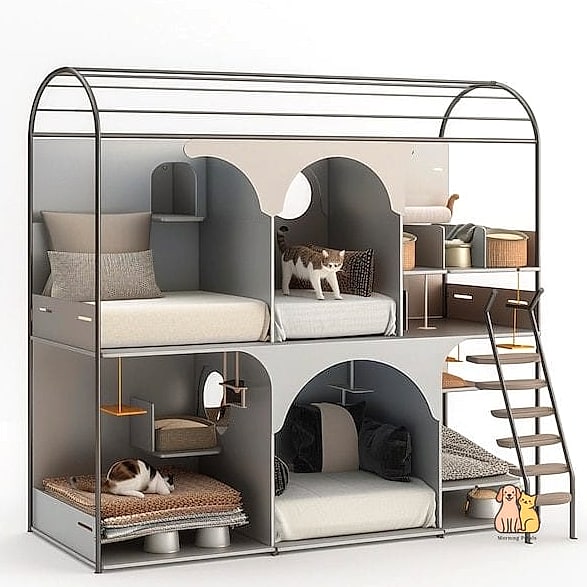
Two stacked enclosed platforms, similar to a bunk bed, give two cats their own separate space while still climbing the same wall. This is a thoughtful idea for multi-cat homes where cats get along but still like personal space.
The Repurposed Ladder Climbing Wall
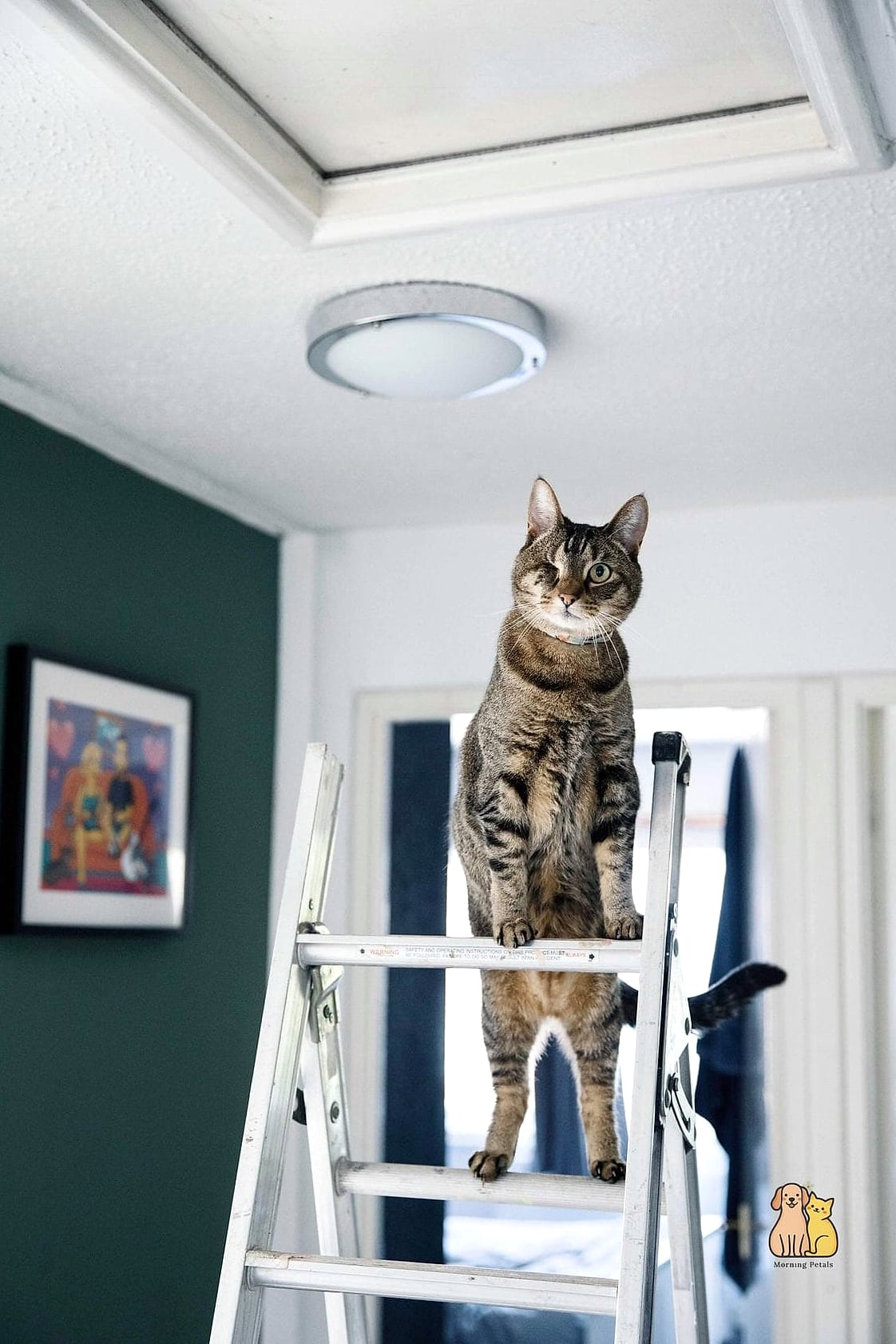
An old wooden ladder mounted horizontally against the wall, rungs pointing outward, creates an instant rustic climbing structure with almost no building required. It’s one of the easiest DIY projects on this list and a great option if you’re working with a tight budget.
The Built-In Wall Nook System
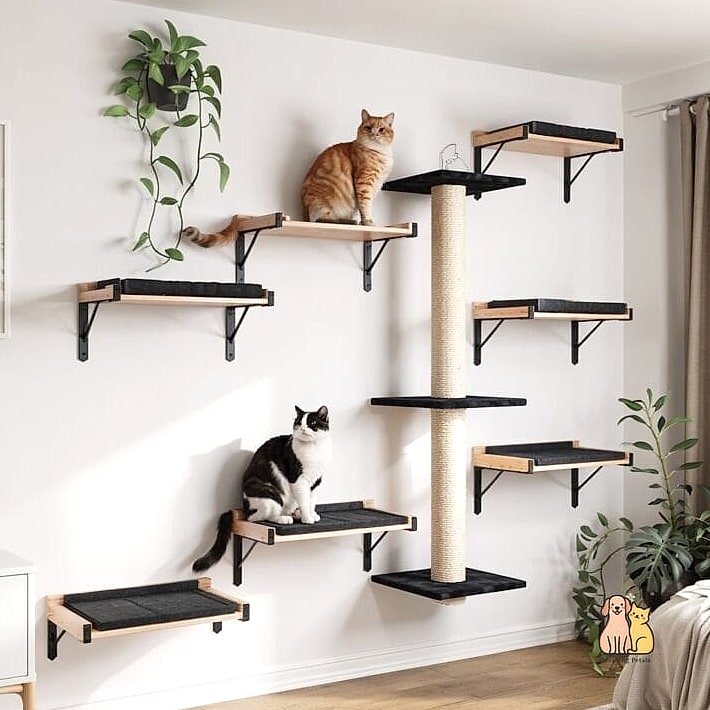
For homeowners doing renovations, built-in nooks carved directly into the wall create a seamless, permanent climbing structure that looks like part of the home’s architecture. This is a premium option but adds real value and a wow factor for cat-loving homeowners.
The Rotating Seasonal Decor Wall
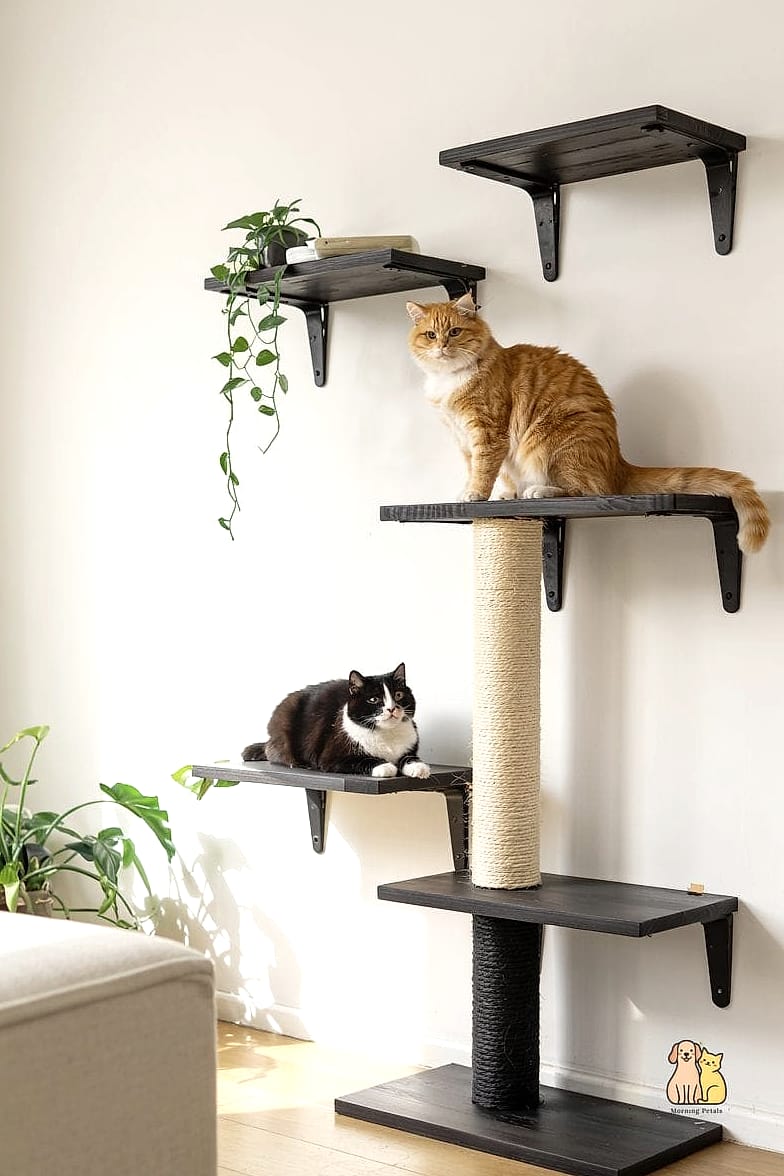
Design your climbing wall with removable, swappable shelf covers or decor accents so you can change the look for different seasons or holidays. This keeps the space feeling fresh and gives you a fun styling project every few months.
The Puzzle Feeder Climbing Wall
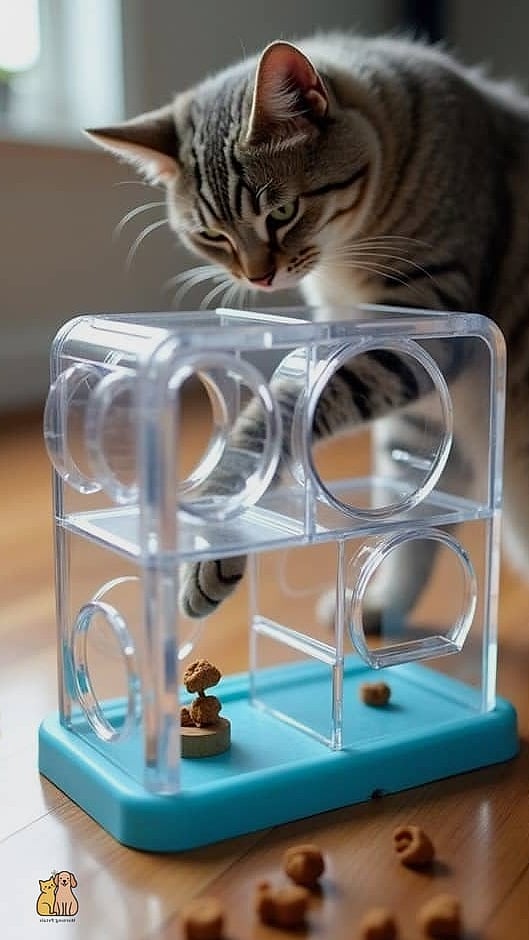
Attach small puzzle feeders or treat-dispensing toys along the climbing path so your cat gets mental stimulation along with the physical workout. This is a wonderful idea for food-motivated cats or households looking to slow down fast eaters.
The Ceiling-to-Floor Statement Wall
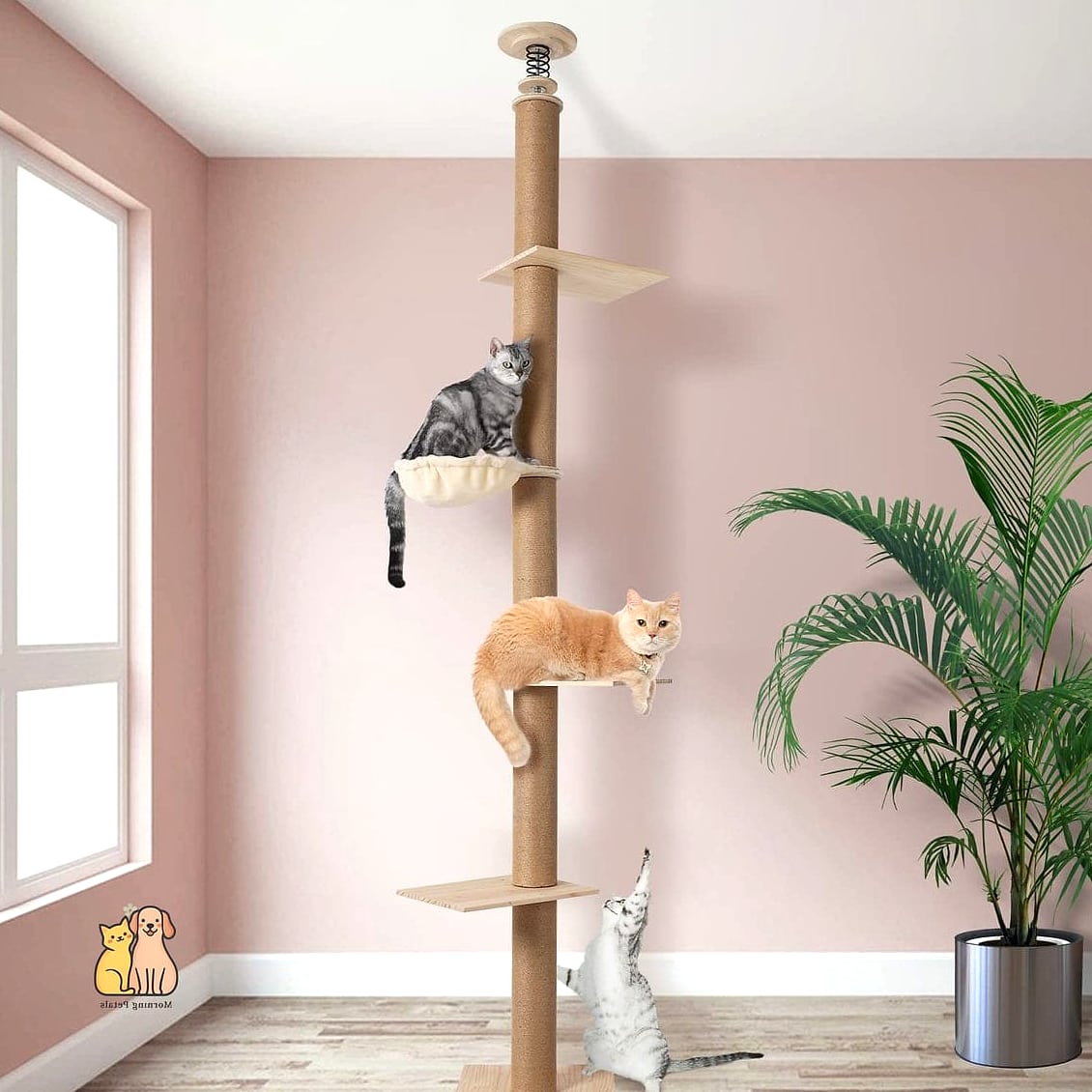
The ultimate showpiece: a fully designed climbing wall that spans from floor to ceiling, combining shelves, hammocks, tunnels, scratch posts, and hideaways into one cohesive design. This is a bigger project, ideally suited for cat lovers who want their home to feel like it was designed around their cat as much as themselves, and it makes an unforgettable first impression for guests.
Building a cat climbing wall doesn’t have to happen all at once. Start with a few shelves near a favorite window, watch how your cat uses the space, and expand from there based on what they actually enjoy. Every cat has their own climbing style, some prefer long horizontal paths while others want to bolt straight to the highest point, so pay attention and let their personality guide the design.
Whatever combination of these thirty ideas you choose, your cat will thank you with better exercise, less destructive scratching, and probably a lot more smug staring down at you from up high. That’s just part of the deal when you share your home with a cat.